


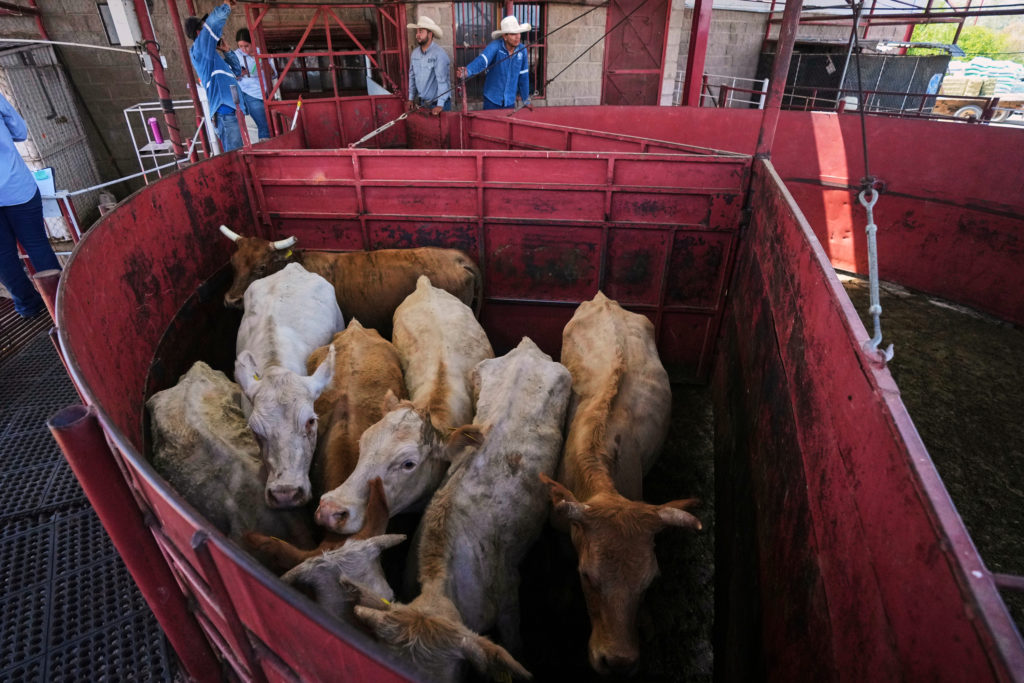
U.S. border reopens to Mexican cattle imports, but economists doubt the move will reduce high beef prices
Summarized and contextualized by DistantNews.
At a glance
News
Named sources
New plan
- The U.S. reopened a border crossing in Arizona to Mexican cattle imports, aiming to lower high beef prices.
- Economists are skeptical that the move will significantly impact grocery store prices for consumers.
- The border closure in May 2025 due to screwworm concerns had exacerbated U.S. cattle shortages, contributing to price hikes.
The United States has reopened a border crossing in Arizona to cattle imports from Mexico, a move intended by the Trump administration to combat record-high beef prices. However, economists express doubt that this action will translate into noticeable savings for consumers at the grocery store.
Today, the border in Sonora is open for livestock.
The U.S. Department of Agriculture stated that concerns regarding the spread of the New World screwworm have diminished sufficiently to permit cattle movement from Mexico at the Douglas, Arizona crossing. The administration hopes to eventually reopen similar crossings in New Mexico and Texas. Mexican President Claudia Sheinbaum confirmed the border's opening for livestock on Monday.
The administration obviously has a lot of incentive to try to be able to say that they're doing something about high beef prices in particular.
Beef prices have been a significant concern, prompting President Donald Trump's announcement Friday to allow up to 331,000 tons of tariff-free ground beef imports over 90 days. The White House had previously deemed the border closure in May 2025, implemented to contain the screwworm parasite, as essential. This closure, however, worsened the shortage of cattle available for slaughter in the U.S.
Beef has been singled out because it is an expensive product and because it's just high profile.
Derrell Peel, a professor of agribusiness at Oklahoma State University, noted the administration's incentive to appear proactive on high beef prices, which are particularly visible due to their cost and public profile. He anticipates that the phased reopening will take months to restore traditional import levels, and he does not expect any immediate, measurable impact on cattle or beef prices. The U.S. cattle herd is currently at its smallest in decades, a factor that has fueled record prices. The average price of ground beef has risen nearly 57% from July 2021 to July 2026.
I don't expect to see any measurable impact on cattle prices or beef prices soon.
DistantNews Editorial
Originally published by PBS NewsHour. Summarized and contextualized by our editorial team with added local perspective. Read our editorial standards.
More Stories


From Our Blog

How the Same Story Looks Different in Different Countries

What Gets Lost (and Found) When News Is Translated

The Critical Role of Diaspora Media in Global News

What Travellers Should Know About Countries with Restricted Press

A Digital Nomad's Guide to Following Local News
