


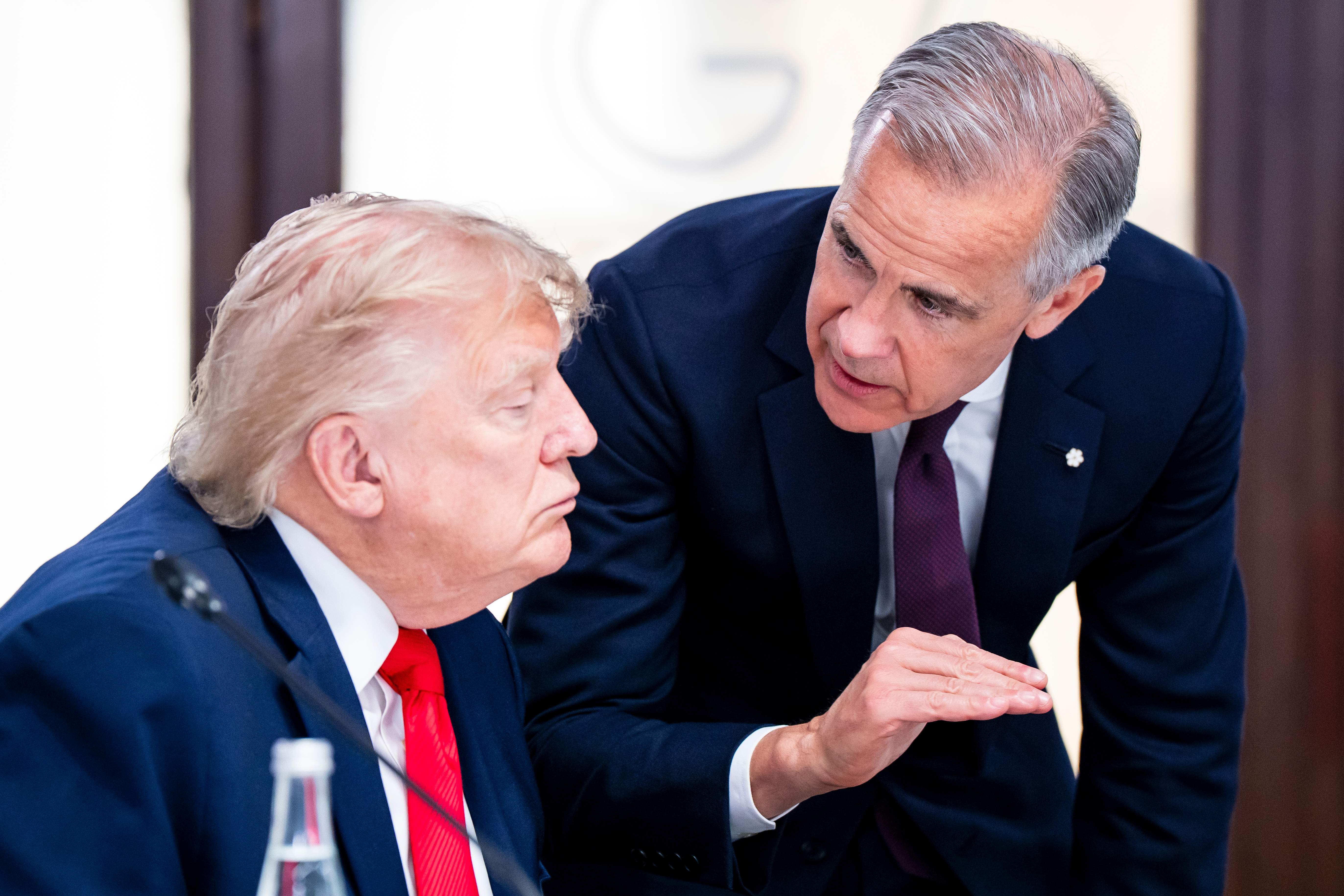
U.S.-Canada trade talks have collapsed. Carney says these 3 issues torpedoed them
Summarized and contextualized by DistantNews.
At a glance
News
Sources not specified
Context piece
- Trade talks between Canada and the United States have collapsed just before a deal was expected.
- Key disagreements centered on tariffs for autos and broader issues of Canadian independent decision-making.
- Prime Minister Mark Carney recalled his negotiating team, stating he was "walking away from a bad deal."
Canadian Prime Minister Mark Carney announced the collapse of trade talks with the United States, citing last-minute disagreements that torpedoed a deal that had appeared within reach. The negotiations faltered over contentious issues including the tariff treatment of autos and broader concerns about preserving Canada's independent decision-making capabilities.
Prime Minister Mark Carney says trade talks with the United States fell apart at the eleventh hour over last-minute disagreements on how to tariff autos and broader issues of independent Canadian decision-making.
Just days prior, U.S. President Donald Trump had delayed tariffs on billions of dollars in Canadian goods, suggesting progress and even claiming a deal was imminent. Carney himself had shared details of a potential agreement with Canada's premiers, indicating a positive trajectory. However, at the eleventh hour, Carney recalled his negotiating team to Ottawa, declaring his decision to "walk away from a bad deal."
But at the last minute, Carney recalled his negotiating team to Ottawa, telling the nation he was “walking away from a bad deal.”
Central to the breakdown were disagreements over auto tariffs. The U.S. had previously imposed a 25 percent tariff on vehicles assembled in Canada, with Trump expressing a desire for automakers to shift production to the United States. While Carney indicated progress had been made on integrating autos into a trade deal, the sides ultimately diverged on "the treatment of Canadian content" in vehicles. Furthermore, the U.S. was reportedly unwilling to extend tariff relief to medium or heavy vehicles like trucks, which would significantly impact Canadian assembly plants.
The prime minister said Saturday the two sides disagreed over “the treatment of Canadian content” in vehicles, while the United States was only willing to agree to a trade deal on cars and would not extend it to medium or heavy vehicles like trucks.
Another major sticking point involved U.S. demands to limit Canada's ability to pursue independent trade deals with other countries. Since the imposition of tariffs, Canada has actively sought new trade agreements globally, positioning itself as a "middle power." The U.S. reportedly introduced terms in the final hours of negotiation that would restrict these efforts, a move Carney characterized as lacking "rationale."
The U.S. introduced, in the last hours, eff
DistantNews Editorial
Originally published by Global News. Summarized and contextualized by our editorial team with added local perspective. Read our editorial standards.
More Stories
From Our Blog

What Gets Lost (and Found) When News Is Translated

The Critical Role of Diaspora Media in Global News

What Travellers Should Know About Countries with Restricted Press

A Digital Nomad's Guide to Following Local News

How the Same Story Looks Different in Different Countries
