


U.S. Government Halts Titanic Artifact Auction, Citing Public Interest
Translated from Korean, summarized and contextualized by DistantNews.
At a glance
News
Named sources
Under investigation
- The U.S. government has intervened to halt the auction of artifacts recovered from the Titanic shipwreck.
- The National Oceanic and Atmospheric Administration (NOAA) argues that the auction violates legal obligations to preserve the wreck site as a whole.
- Critics, including victims' families and ocean explorers, believe the artifacts should be preserved for public benefit, not sold to the wealthy.
The U.S. government has placed a hold on an auction of artifacts recovered from the Titanic, which sank in the Atlantic in 1912, resulting in over 1,500 deaths. RMS Titanic Inc., the exclusive salvor-in-possession of the wreck, had planned to auction more than 100 items, including decorative pieces, personal belongings, currency, and kitchenware.
The National Oceanic and Atmospheric Administration (NOAA), which oversees the shipwreck site, determined that the auction plan violates legal obligations. NOAA insists that the approximately 5,000 artifacts must be preserved as a single collection under court-ordered conditions. RMS Titanic Inc. has been recovering and exhibiting artifacts since 1987 to generate revenue.
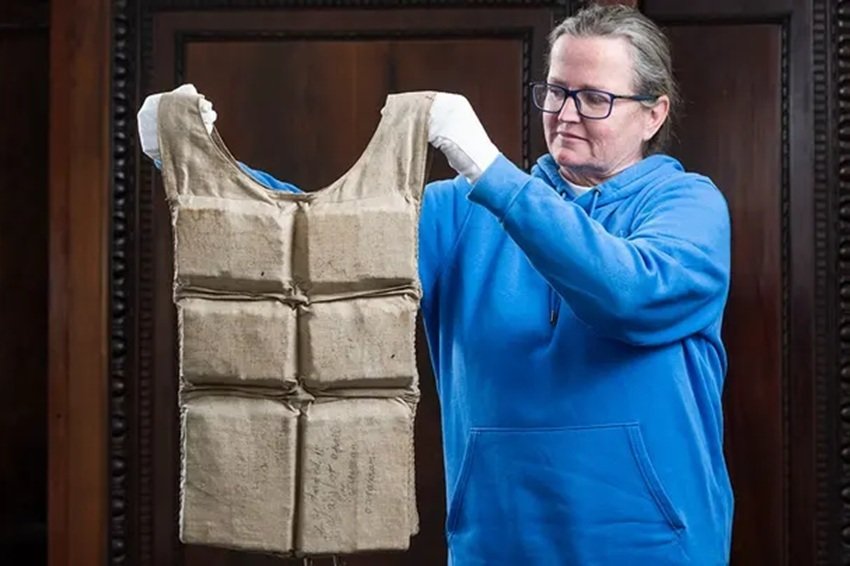
Recent sales include a Titanic life vest that sold for over $900,000 and a gold pocket watch presented to the captain who rescued survivors, which fetched nearly $2 million in 2024. These efforts to monetize the artifacts have drawn opposition not only from victims' families but also from ocean explorers.
Richard Dealy, a professor at Northeastern University School of Law, stated to the AP, "Billionaires should not be allowed to take artifacts to show off their wealth and power." The core argument against the auction is that the Titanic artifacts are a significant historical resource that should be preserved and made accessible for public benefit and education, rather than being treated as commodities for private acquisition.
Billionaires should not be allowed to take artifacts to show off their wealth and power.
DistantNews Editorial
Originally published by Dong-A Ilbo in Korean. Translated, summarized, and contextualized by our editorial team with added local perspective. Read our editorial standards.
More Stories


From Our Blog

What Gets Lost (and Found) When News Is Translated

The Critical Role of Diaspora Media in Global News

What Travellers Should Know About Countries with Restricted Press

A Digital Nomad's Guide to Following Local News

How the Same Story Looks Different in Different Countries
