


U.S.-Iran deal a 'strategic defeat' for Israel, Middle East expert says
Summarized and contextualized by DistantNews.
At a glance
Interview
Named sources
Context piece
- An expert described the U.S.-Iran deal as a 'strategic defeat' for Israel, raising concerns about U.S.-Israeli relations.
- The expert noted significant stress on the foundations of the U.S. alliance with Israel, including shared interests and domestic support.
- The relationship between President Trump and Prime Minister Netanyahu is under pressure, with Trump's public comments and leverage potentially impacting Netanyahu's political standing.
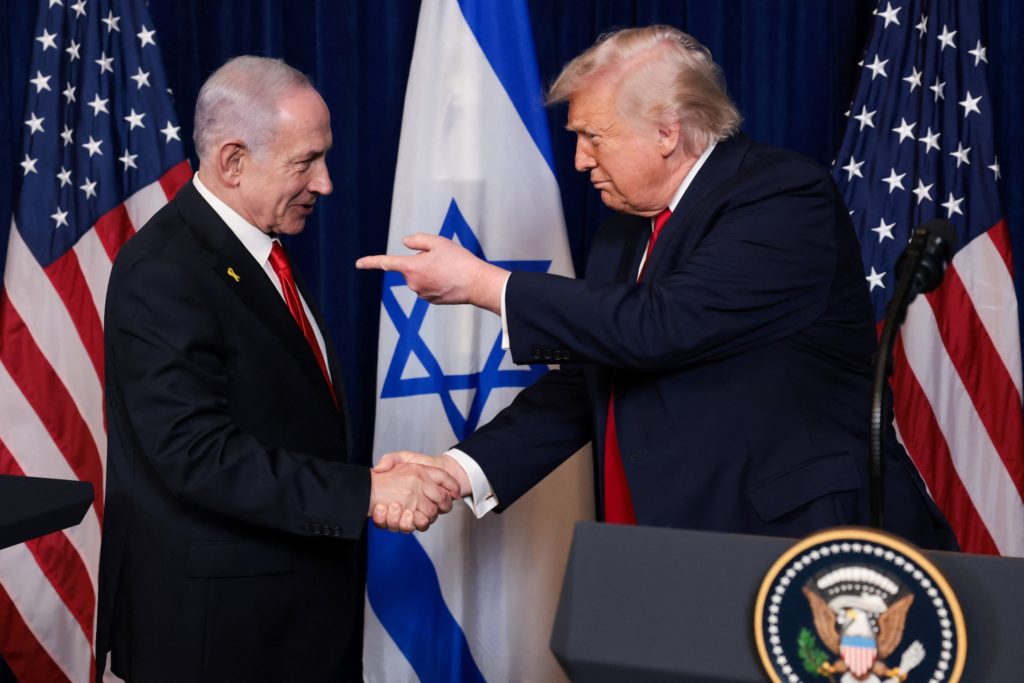
A Middle East expert has characterized the U.S.-Iran deal as a "strategic defeat" for Israel, highlighting growing concerns about the state of U.S.-Israeli relations and the personal dynamic between President Donald Trump and Prime Minister Benjamin Netanyahu.
I mean, I think there's grave concern, understandably, because on the issue of Iran's nuclear program, the U.S. is Mars and the Israelis are Venus.
Aaron David Miller, a senior fellow at the Carnegie Endowment for International Peace who has served in both Democratic and Republican administrations, stated that the foundations of the U.S. alliance with Israel are experiencing more stress than at any point he has witnessed. He pointed to a divergence in interests, values, and domestic support as key factors contributing to this strain.
If a U.S. ally is defined as someone who has a high coincidence of interests, shared common values, and a strong base of domestic support, in all three of these foundations, there's more stress than at any time I have seen.
Miller specifically addressed the complex relationship between Trump and Netanyahu. He noted that Trump has publicly made critical remarks about Netanyahu and allowed private, often mocking, conversations about the prime minister's judgment to become public. This unprecedented situation, according to Miller, gives Trump significant leverage, particularly in light of upcoming elections.
This is unprecedented. So Trump has enormous leverage because of the elections. Trump cannot elect Benjamin Netanyahu, but unless he campaigns actively for him, Netanyahu's vulnerabilities -- and there are some -- are going to expand exponentially.
While Trump cannot single-handedly elect Netanyahu, Miller suggested that without active campaigning from Trump, Netanyahu's existing vulnerabilities could be significantly amplified. The expert also indicated that Lebanon is currently part of the broader problem in the region. The details emerging about the U.S.-Iran deal are perceived from an Israeli perspective, and potentially others, as a capitulation or giving away too much too soon, especially considering the administration's perceived overestimation of its own capacity and underestimation of its adversary in what Miller termed a "war of choice."
This was a war of choice. And I worked and voted for Republicans and Democrats. This is a war of choice in which the administration overestimated its own capacity and underestimated the capacity of its adversary.
DistantNews Editorial
Originally published by PBS NewsHour. Summarized and contextualized by our editorial team with added local perspective. Read our editorial standards.
More Stories


From Our Blog

How the Same Story Looks Different in Different Countries

What Gets Lost (and Found) When News Is Translated

The Critical Role of Diaspora Media in Global News

What Travellers Should Know About Countries with Restricted Press

A Digital Nomad's Guide to Following Local News
