


U.S. Resumes Naval Blockade on Iran Amidst Multiple Explosions
Translated from Korean, summarized and contextualized by DistantNews.
At a glance
News
Official statement
Ongoing story
- The U.S. has resumed naval blockades and conducted further airstrikes against Iran.
- Multiple explosions were reported in southern Iran, including near Bandar Abbas.
- The U.S. military stated it has over 20 warships and hundreds of aircraft deployed in the Middle East.
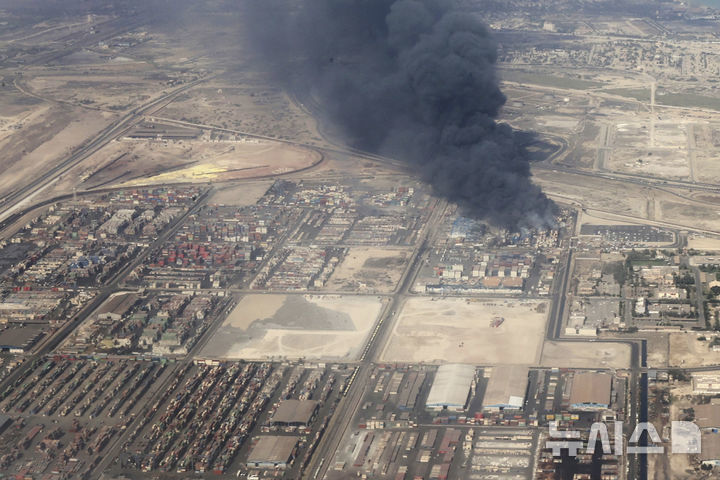
The United States has intensified its military actions against Iran, resuming naval blockades and launching additional airstrikes targeting key Iranian military facilities. These actions come as multiple explosions were reported across southern Iran, particularly near the port city of Bandar Abbas.
We have resumed the naval blockade against all vessels traveling to and from Iranian ports and coastal areas.
The U.S. Central Command (CENTCOM) announced on X that the naval blockade against all vessels traveling to and from Iranian ports and coastal areas began at 4 p.m. Eastern Time on the 14th. CENTCOM warned that over 20 U.S. Navy warships and hundreds of military aircraft are currently deployed across the Middle East, ready to inflict "crippling damage" on Iran at any moment.
Approximately one hour before the blockade commenced, the U.S. conducted further airstrikes, leading to significant explosions in strategic locations in southern Iran. These strikes, which have continued for four consecutive days, aim to neutralize Iran's ability to attack commercial shipping. Reports from Iranian state media indicate explosions occurred in Bandar Abbas, Ahvaz, and on Kish and Qeshm islands.
More than 20 U.S. Navy warships and hundreds of military aircraft are currently deployed across the Middle East and are fully prepared to inflict crippling damage on Iran at any moment.
Analysts suggest these aggressive measures by the U.S. signal a potential escalation into full-scale conflict, especially after a memorandum of understanding for a ceasefire between the U.S. and Iran reportedly became void due to clashes in the Strait of Hormuz. Kenneth Pollack, an expert at the Middle East Institute and former CIA analyst, described the situation as a "coercive war of attrition" where both sides are pushing the other to their breaking point, a conflict that could potentially continue indefinitely.
We are trapped in a coercive war of attrition. Both sides are trying to push the other to an unknown breaking point. Coercive wars can go on endlessly.
DistantNews Editorial
Originally published by Dong-A Ilbo in Korean. Translated, summarized, and contextualized by our editorial team with added local perspective. Read our editorial standards.
More Stories


From Our Blog

What Gets Lost (and Found) When News Is Translated

The Critical Role of Diaspora Media in Global News

What Travellers Should Know About Countries with Restricted Press

A Digital Nomad's Guide to Following Local News

How the Same Story Looks Different in Different Countries
