


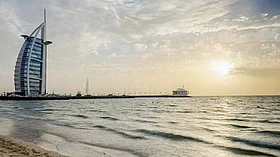

UAE’s heat-tolerant coral reefs face a new threat as climate change intensifies
Translated from English and summarized by DistantNews. Read the original for the full story.
At a glance
News
Named sources
Context piece
- The UAE’s unusually hot marine environment offers scientists a natural laboratory for studying how ecosystems may respond to rising global temperatures.
- Researchers warn that the Gulf’s heat-tolerant corals and other marine species remain vulnerable, citing widespread coral deaths during a severe 2017 bleaching event.
- More than 800 reef surveys over 19 years found declining reef health in parts of the region, underscoring the need for closer monitoring and intervention.
The UAE’s marine ecosystems can withstand some of the hottest conditions on the planet, but researchers warn that resilience has limits. The Gulf’s heat-tolerant corals are showing signs of stress as climate change intensifies.
This is an incredibly hot system that we're seeing.
Professor John A. Burt, director of the Mubadala Arabian Center for Climate and Environmental Sciences at NYU Abu Dhabi, described the UAE’s coastal waters as a valuable setting for climate research. The country’s shorelines contain mosaic ecosystems, including about 4 per cent of the world’s seagrass, he said.
“This is an incredibly hot system that we're seeing,” Burt said. He called the UAE “an important natural laboratory” for understanding how organisms cope with extreme environmental conditions. Experts discussed that role at the DECCA 2026 event at the Grand Hyatt Dubai, where they examined the growing importance of technology, conservation and monitoring.
The UAE represents an important natural laboratory to really try and understand how organisms cope with and respond to extreme environmental conditions.
But Burt cautioned against treating the Gulf’s ability to endure extreme heat as immunity to climate change. During a severe bleaching event in 2017, summer temperatures reached 38°C, about 2°C above the normal summer maximum, causing widespread coral mortality.
We have these robust systems that are here that are able to cope with these extreme environmental issues, but that does not mean they're immune to climate change.
“We have these robust systems that are here that are able to cope with these extreme environmental issues, but that does not mean they're immune to climate change,” Burt said. Research based on more than 800 coral reef surveys conducted over 19 years also found deteriorating reef health in parts of the region. The warning extends to fish, which can be significantly smaller in the Gulf. Burt said a Hamour fish produces about 350,000 eggs per female, but a fish 10 centimetres larger could produce 3.5 million, highlighting the implications for reproduction and potentially for the UAE’s future food security.
If you're talking about Hamour, it's going to produce about 350,000 eggs per female. If it gets 10 centimeters bigger, it's going to produce 3.5 million eggs.
About this summary
Originally published by Khaleej Times in English. Translated, summarized, and contextualized automatically by DistantNews, with a note on how the source frames the story. Not individually reviewed before publishing. How this works.
More Stories


From Our Blog

News in Translation: What Gets Lost, and How We Keep the Framing

Diaspora Media: How Communities Follow News From Home

Traveling Where the Press Is Not Free: How to Read the News There

The Digital Nomad's Guide to Local News

The Same Story, Different Countries: How Coverage Changes at the Border
