


Uganda posts first monthly fiscal surplus in six months on strong tax collections
Translated from English, summarized and contextualized by DistantNews.
At a glance
News
Named sources
Context piece
- Uganda recorded its first monthly fiscal surplus in six months in June, with government operations ending the month with a surplus of approximately 517 billion Shillings.
- This turnaround was driven by stronger-than-expected tax collections by the Uganda Revenue Authority (URA), which exceeded its target by about 800 billion Shillings.
- The surplus helped offset weaker revenue collections earlier in the financial year, attributed partly to the 2026 election period slowing business activity and disrupting tax enforcement.
Uganda achieved its first monthly fiscal surplus in six months in June, a significant turnaround from a projected deficit. Government operations concluded the month with a surplus of approximately 517 billion Shillings, reversing a projected deficit of about 691 billion Shillings and marking the first net lending position since December 2025.
The turnaround was driven by robust tax collections and lower-than-planned spending on some development projects.
The turnaround was primarily fueled by robust tax collections and lower-than-planned spending on certain development projects. The Uganda Revenue Authority (URA) collected 5.8 trillion Shillings in June, surpassing its target by roughly 800 billion Shillings. Ministry of Finance data indicates that this additional revenue largely came from taxes, despite non-tax revenue and grants falling short of expectations.
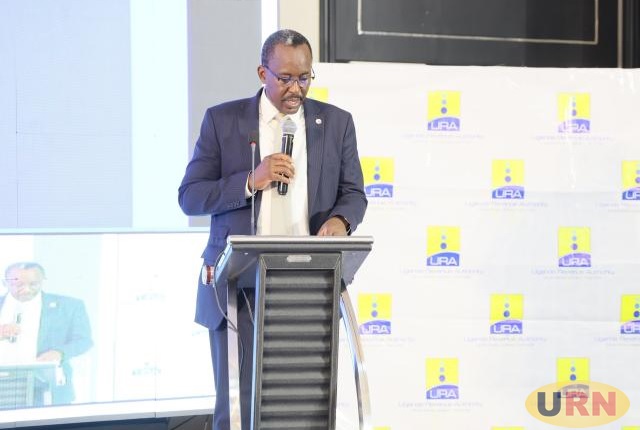
URA Commissioner General John Musinguzi Rujoki attributed the performance to stronger economic activity, improved tax administration and better compliance by taxpayers as the financial year came to a close.
URA Commissioner General John Musinguzi Rujoki attributed the strong performance to increased economic activity, enhanced tax administration, and improved taxpayer compliance as the financial year concluded. This June performance was crucial in compensating for weaker revenue collections earlier in the fiscal year. Denis Kugonza Kateeba, URA Commissioner for Domestic Taxes, noted that the 2026 election period had previously slowed business activity and disrupted tax enforcement, contributing to earlier revenue shortfalls.
According to URA Commissioner for Domestic Taxes Denis Kugonza Kateeba, the 2026 election period slowed business activity and disrupted tax enforcement during the first half of the financial year, contributing to revenue shortfalls.
Revenue collections improved significantly in the latter half of the year as business activity normalized. Tax amnesties and administrative reforms encouraged greater taxpayer compliance. The strongest revenue gains were observed across income taxes, domestic consumption taxes, and import-related taxes, reflecting increased business activity, consumer spending, and international trade. Despite the revenue surplus, government spending remained high, with recurrent expenditures in June slightly exceeding targets due to increased spending on salaries and operational costs, partly influenced by supplementary budgets approved by Parliament.
While revenue exceeded expectations, government spending also remained high.
DistantNews Editorial
Originally published by The Independent Uganda in English. Translated, summarized, and contextualized by our editorial team with added local perspective. Read our editorial standards.
More Stories


From Our Blog

What Gets Lost (and Found) When News Is Translated

The Critical Role of Diaspora Media in Global News

What Travellers Should Know About Countries with Restricted Press

A Digital Nomad's Guide to Following Local News

How the Same Story Looks Different in Different Countries
