


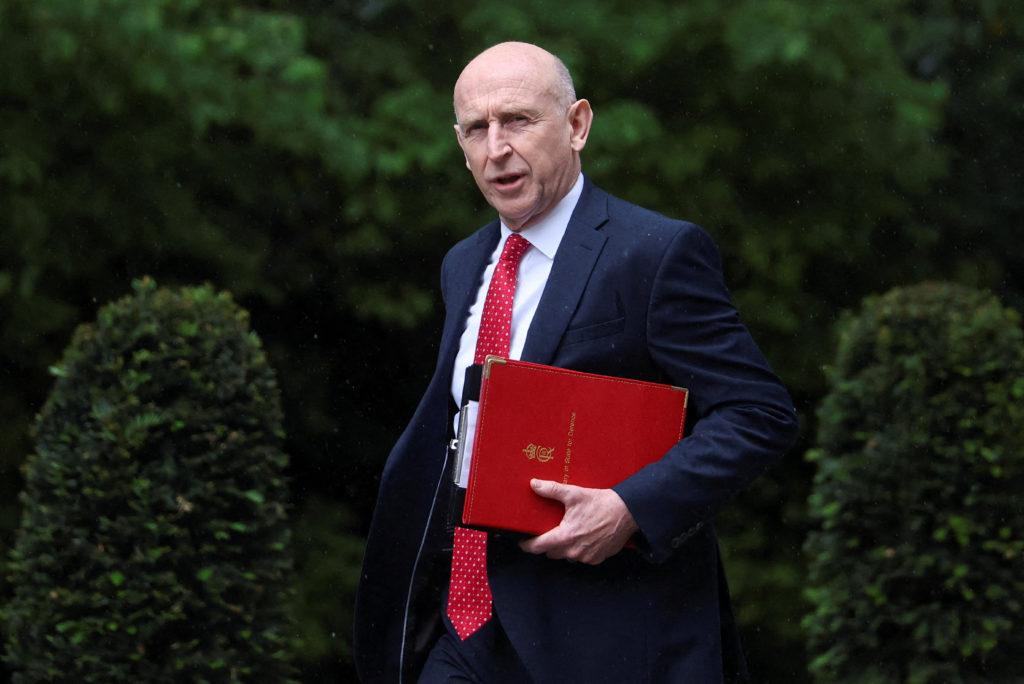
UK defense secretary resigns, citing insufficient military spending amid rising threats
Translated from English, summarized and contextualized by DistantNews.
At a glance
News
Named sources
Outcome reported
- U.K. Defense Secretary John Healey resigned, citing the government's insufficient spending on military defense amid rising global threats.
- Healey stated the government's Defense Investment Plan falls short of national security needs.
- Prime Minister Keir Starmer defended the funding plan, calling it sustainable and fair, while critics argue it's too little, too late.
U.K. Defense Secretary John Healey has unexpectedly resigned, delivering a blow to Prime Minister Keir Starmer's government. Healey cited the government's unwillingness to allocate adequate funds to the military at a time of escalating global threats as the reason for his departure.
The government's Defense Investment Plan falls well short of what is required at this dangerous time.
In a letter to Starmer, Healey asserted that the government's Defense Investment Plan "falls well short of what is required at this dangerous time." The plan's publication has been delayed, reportedly due to disagreements between the Defense Ministry and the Treasury. Healey expressed that the plan, presented to him on Monday, would only increase defense spending to 2.68% of GDP by 2030, which he deems insufficient given the demands of the Iran war, Russia's invasion of Ukraine, and other threats.
You have been unable, and the Treasury has been unwilling, to commit the resources that the nation needs to defend the country at this time of rising threats.
Prime Minister Starmer, while expressing regret over Healey's resignation, defended the funding strategy. He insisted the plan would provide necessary resources sustainably and fairly, involving reallocations across government departments. Starmer has pledged to increase U.K. defense spending to 2.5% of GDP by 2027 and 3% by 2035. However, many in the military community argue these targets are not ambitious enough.
The increases in spending that underpin this plan will be sustainable and fair. They will mean significant reallocations of funding from across government departments and the right choices to protect our nation.
Gen. Richard Barrons, who contributed to the defense review underpinning the investment plan, criticized the government for "actively going backwards" by refusing to fund its own review. He warned that this inaction diminishes the U.K.'s standing within NATO, weakens its credibility with allies, and increases its vulnerability. Despite these criticisms, the government maintains it is delivering "the largest sustained boost to defense spending since the Cold War," asserting that the country is safer due to Starmer's decisions.
It diminishes the U.K.'s standing within NATO, weakens our credibility with allies, and increases our vulnerability to the realities of 21st-century conflict.
DistantNews Editorial
Originally published by PBS NewsHour in English. Translated, summarized, and contextualized by our editorial team with added local perspective. Read our editorial standards.
More Stories


From Our Blog

How the Same Story Looks Different in Different Countries

What Gets Lost (and Found) When News Is Translated

The Critical Role of Diaspora Media in Global News

What Travellers Should Know About Countries with Restricted Press

A Digital Nomad's Guide to Following Local News
