


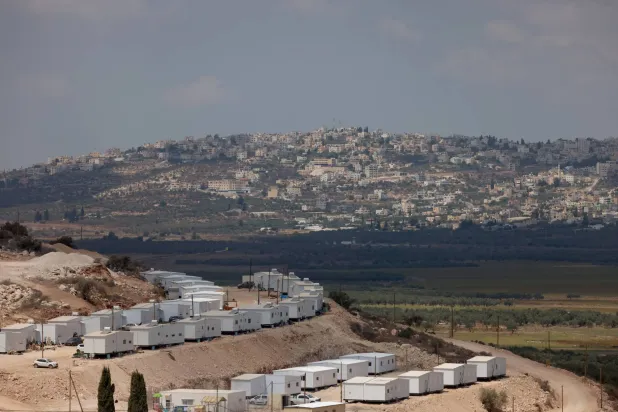
UK to Unveil ‘Comprehensive’ Response to Israeli West Bank Settlement Plans in Coming Weeks
Summarized by DistantNews. Read the original for the full story.
At a glance
Analysis
Named sources
Context piece
- Lebanon’s presidents have taken different approaches to Hezbollah’s weapons over three decades, shaped by domestic power shifts and regional and international circumstances.
- Hezbollah retained its weapons after the civil war under the justification that it represented resistance to Israel, despite the Taif Agreement’s call for all militias to disarm.
- Former lawmaker Fares Saeed says Israeli occupation in southern Lebanon and Syrian control over Lebanese politics helped elevate Hezbollah from a militia to a resistance force.
For more than three decades, Lebanon’s presidents have adjusted their approach to Hezbollah and its weapons as the country’s internal balance of power and wider regional circumstances changed. The decision to exempt Hezbollah from disarmament by defining its weapons as part of the resistance against Israel became the first clear breach of the Taif Agreement, which called for the dissolution and disarmament of all militias that fought in Lebanon’s civil war.
The presidency of Elias Hrawi could not treat Hezbollah like the other militias that were dissolved and disarmed. Under Syrian tutelage, which shaped Lebanon’s political decisions in coordination with Iran, Hezbollah was recast from a militia as a resistance force. That arrangement remained in place until Israel withdrew from southern Lebanon on May 25, 2000.
Israeli occupation of part of southern Lebanon and Syria’s control over the internal political game imposed a distinction between Hezbollah and the other Lebanese militias that existed during the civil war.
A new phase followed the withdrawal. Hezbollah remained both a political and military actor, with capabilities that exceeded those of Lebanon’s state institutions. When army commander Emile Lahoud became president in October 1998 with Syrian backing, Hezbollah’s influence inside the state grew, especially after Israel’s departure. The formula of “army, people and resistance” became embedded in successive government ministerial statements, particularly after Israel’s July 2006 war against Lebanon.
led to Hezbollah being elevated from the status of a militia to that of a resistance force, while the other militias were dissolved and disarmed.
The same approach largely continued during Michel Suleiman’s presidency, despite the withdrawal of Syrian forces from Lebanon in April 2005 and the assassination of former Prime Minister Rafic Hariri. Former lawmaker Fares Saeed, head of the Saydet al-Jabal Gathering, says the distinction between Hezbollah and the other civil-war militias reflected Israel’s occupation of part of southern Lebanon and Syria’s control over Lebanese political life.
Saeed also links the shift in Lebanese debate to developments in 2000, including Israel’s withdrawal and the death of Syrian President Hafez al-Assad in June. Those events encouraged the Maronite Council of Bishops, led by the late Patriarch Nasrallah Boutros Sfeir, to call more forcefully for Syrian forces to leave Lebanon. Saeed describes the bishops’ position as historic and courageous, arguing that Israel’s withdrawal raised the question of why Hezbollah should continue to be treated differently.
This historic and courageous position was based on a clear logic.
About this summary
Originally published by Asharq Al-Awsat. Summarized and contextualized automatically by DistantNews, with a note on how the source frames the story. Not individually reviewed before publishing. How this works.
More Stories


From Our Blog

What Gets Lost (and Found) When News Is Translated

The Critical Role of Diaspora Media in Global News

What Travellers Should Know About Countries with Restricted Press

A Digital Nomad's Guide to Following Local News

How the Same Story Looks Different in Different Countries
