

Ukraine war teaches NATO: Drone command centers must go underground and move constantly
Translated from Romanian, summarized and contextualized by DistantNews.
At a glance
News
Named sources
Ongoing story
- Ukraine's extensive drone warfare experience offers valuable lessons for NATO, which is heavily investing in unmanned systems.
- Ukrainian military officials emphasize the need for drone command centers to be hidden underground and constantly relocated to avoid enemy targeting.
- The conflict highlights that drone operators are now primary targets, requiring enhanced protection and operational security.
Ukraine's battlefield experience in drone warfare, accumulated over more than four years of conflict, is providing critical lessons for NATO as the alliance significantly increases its investment in unmanned military technology. The costly experience gained by Ukrainian forces is shaping new strategies for drone operations and protection.
A key takeaway for Ukrainian military personnel is that drone units and their command centers have become high-priority targets for the enemy. Taras Berezovets, head of the Military Cooperation Department of Ukraine's Territorial Defense Forces, stresses that Western armies must abandon fixed bases in favor of a more flexible model emphasizing mobility and dispersal. "The drone war is a continuous game of cat and mouse. The Russians are constantly searching for the locations of our drone units," Berezovets explained at a summit on unmanned technologies in Latvia.
The drone war is a continuous game of cat and mouse. The Russians are constantly searching for the locations of our drone units.
Frontline experience has shown that simple camouflage is no longer sufficient. As reconnaissance drones, satellites, and electronic warfare systems become more sophisticated, fixed positions are quickly identified and targeted by missiles, kamikaze drones, or precision artillery. Consequently, Ukraine has begun relocating some of its command and training centers to underground structures. "It is much more expensive, but our experience shows that these centers must be built as deep as possible," Berezovets stated, noting that command posts are often installed in bunkers or specially designed subterranean locations for better concealment and survivability.
It is much more expensive, but our experience shows that these centers must be built as deep as possible.
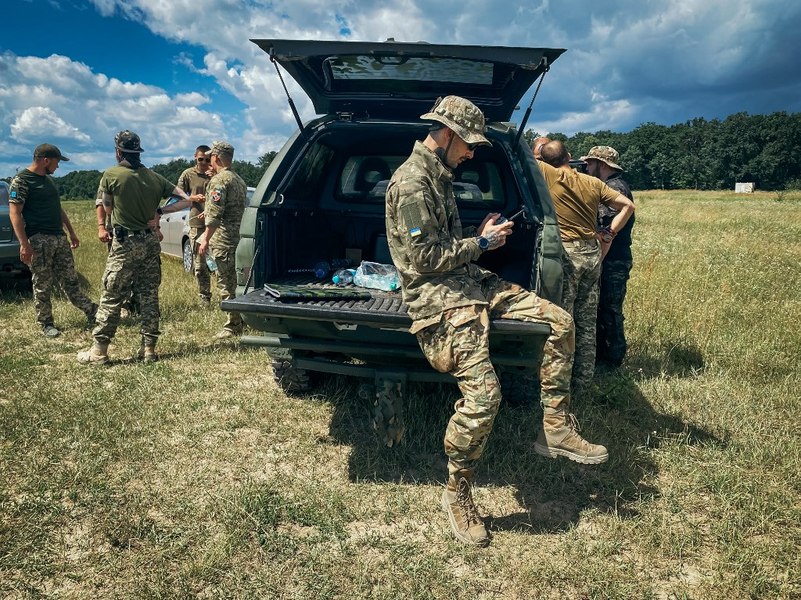
Another strategy adopted by Ukraine involves constant mobility. To evade Russian forces, many command centers operate from specialized vehicles, including trucks and armored personnel carriers converted into coordination points for drone operations. These units frequently change their positions, sometimes multiple times a day. Drone operators themselves often work from underground shelters or hidden locations, piloting aircraft from significant distances away from the combat zone.
These measures are crucial because, according to Kyiv, drones are responsible for approximately 90% of the losses suffered by the Russian army on the front lines. This makes both command centers and drone operators prime targets for Moscow. Berezovets warns that "Operators are the main targets for Russian units. They are trying to kill them," underscoring the systematic efforts to identify and eliminate these specialists.
Operators are the main targets for Russian units. They are trying to kill them.
DistantNews Editorial
Originally published by Adevărul in Romanian. Translated, summarized, and contextualized by our editorial team with added local perspective. Read our editorial standards.
More Stories


From Our Blog

What Gets Lost (and Found) When News Is Translated

The Critical Role of Diaspora Media in Global News

What Travellers Should Know About Countries with Restricted Press

A Digital Nomad's Guide to Following Local News

How the Same Story Looks Different in Different Countries
