


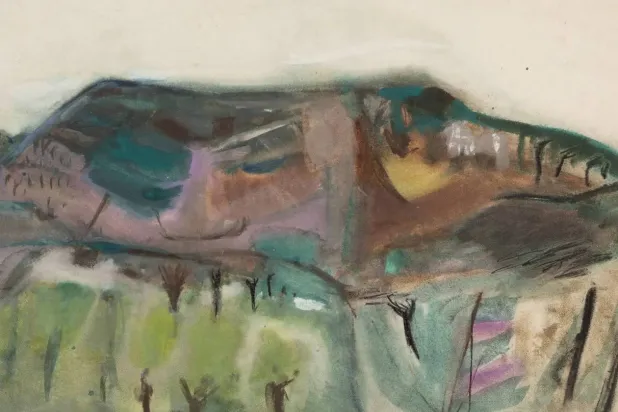
Ukrainian Poet Captures War's Tragedy in Japanese Haiku Form
Translated from English, summarized and contextualized by DistantNews.
At a glance
In-depth
Named sources
Context piece
- Ukrainian poet Vladislava Simonova, celebrated in Japan but little-known in her country, writes haiku about the war.
- She lives in Poltava, a city frequently targeted by Russian drones, which influences her work and daily life.
- Simonova's haiku capture the war's tragedy through "tiny details" and reflect a communion with nature, despite somber themes.
In Poltava, Ukraine, 27-year-old poet Vladislava Simonova finds herself writing about war, a subject she never anticipated. Celebrated in Japan for her haiku but largely unknown in her native Ukraine, Simonova's life is now shaped by the constant threat of Russian attacks. Her apartment, located near a trolleybus depot frequently targeted by drones, places her in a precarious environment where the sound of explosions is a regular occurrence.
I never thought that I would be writing about war. With time, I somehow came to realize that ... tiny details can convey the tragedy of this great war much better than perhaps dozens of reports.
Simonova's creative space reflects her dual interests: a collection of contemporary Ukrainian poets sits alongside Japanese teapots, religious icons, and a "Friends" figurine. She discovered haiku, the traditional Japanese three-line poetry form, as a teenager in 2013. For years, she honed her craft, studying Japanese masters and writing over 600 haiku, which she feels have evolved from "clumsy" to more refined expressions.
Her work gained international recognition after Russia's full-scale invasion in February 2022. While living in a shelter in Kharkiv during the initial months of the assault, she gave an interview to Japan's The Asahi Shimbun newspaper. This led to contact with renowned Japanese poet Madoka Mayuzumi, who praised Simonova's "deep understanding" of haiku's essence. Mayuzumi noted that Simonova's poems, even amidst war, convey a "communion with nature" and possess an "optimism" despite their somber themes.
Even in the midst of war, she gazes up at the moon and stars and admires flowers... her haiku reflect a communion with nature.
Simonova believes that "tiny details can convey the tragedy of this great war much better than perhaps dozens of reports." Her haiku often capture fleeting moments and natural imagery, juxtaposed against the backdrop of conflict. Examples include poems reflecting on apricot petals, returning home in the rain, stars seen through a damaged roof, and bees oblivious to air-raid sirens amidst blooming linden trees. These verses serve as a testament to the resilience of the human spirit and the enduring power of art in times of crisis.
Despite the themes that tend to be sombre, her work possesses a sense of optimism.
DistantNews Editorial
Originally published by Asharq Al-Awsat in English. Translated, summarized, and contextualized by our editorial team with added local perspective. Read our editorial standards.
More Stories


From Our Blog

What Gets Lost (and Found) When News Is Translated

The Critical Role of Diaspora Media in Global News

What Travellers Should Know About Countries with Restricted Press

A Digital Nomad's Guide to Following Local News

How the Same Story Looks Different in Different Countries
