


🇹🇷
Turkey
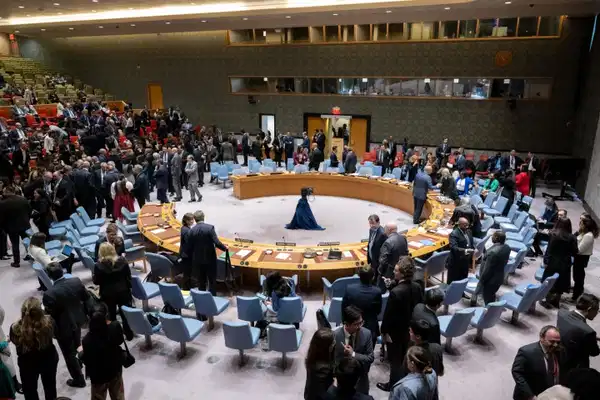
UN Security Council gets five new members for 2027-2028 term
Translated from Turkish, summarized and contextualized by DistantNews.
At a glance
News
Official statement
New plan
- The UN General Assembly elected five new non-permanent members to the Security Council for the 2027-2028 term.
- Austria, Kyrgyzstan, Portugal, Trinidad and Tobago, and Zimbabwe will serve two-year terms starting January 1, 2027.
- Kyrgyzstan secured a seat for the first time in its history.
The United Nations General Assembly has selected five new non-permanent members for the Security Council, who will serve during the 2027-2028 term. Austria, Kyrgyzstan, Portugal, Trinidad and Tobago, and Zimbabwe are set to take their seats on January 1, 2027, for a period of two years.
In the Western Europe and Others Group, Portugal garnered 134 votes and Austria received 131 votes, securing both available seats. Germany, which had lobbied extensively for a position, fell short with 104 votes, placing third.
The election for the Asia-Pacific Group's seat was a contest between Kyrgyzstan and the Philippines. After a four-round voting process, Kyrgyzstan emerged victorious, achieving the required two-thirds majority with 142 votes. This marks a historic moment, as Kyrgyzstan has been elected to the UN Security Council for the first time.
The newly elected countries will replace outgoing members. Zimbabwe will succeed Somalia, Trinidad and Tobago will take over from Panama, and Portugal and Austria will replace Denmark and Greece, respectively. Kyrgyzstan will fill the vacancy left by Pakistan.
Bahrain, Colombia, the Democratic Republic of Congo, Latvia, and Liberia will continue their terms on the Security Council until the end of 2027. The UN Security Council is the only UN body with the authority to make legally binding decisions, including imposing sanctions and authorizing the use of force. It comprises five permanent members with veto power, the United States, the United Kingdom, China, France, and Russia, and ten non-permanent members elected annually for two-year terms.
DistantNews Editorial
Originally published by Cumhuriyet in Turkish. Translated, summarized, and contextualized by our editorial team with added local perspective. Read our editorial standards.
More Stories


From Our Blog

What Gets Lost (and Found) When News Is Translated

The Critical Role of Diaspora Media in Global News

What Travellers Should Know About Countries with Restricted Press

A Digital Nomad's Guide to Following Local News

How the Same Story Looks Different in Different Countries
