

UN Security Council holds second informal poll for next leader
Translated from English, summarized and contextualized by DistantNews.
At a glance
News
Named sources
Ongoing story
- The UN Security Council is holding a second informal poll to gauge the popularity of candidates vying to succeed Secretary-General Antonio Guterres.
- Costa Rica's Rebeca Grynspan was the front-runner after the first vote, with other contenders including Argentina's Rafael Grossi and Chile's Michelle Bachelet.
- Diplomats expect fluctuations in the vote distribution, with no candidate likely to secure a decisive lead in this round.
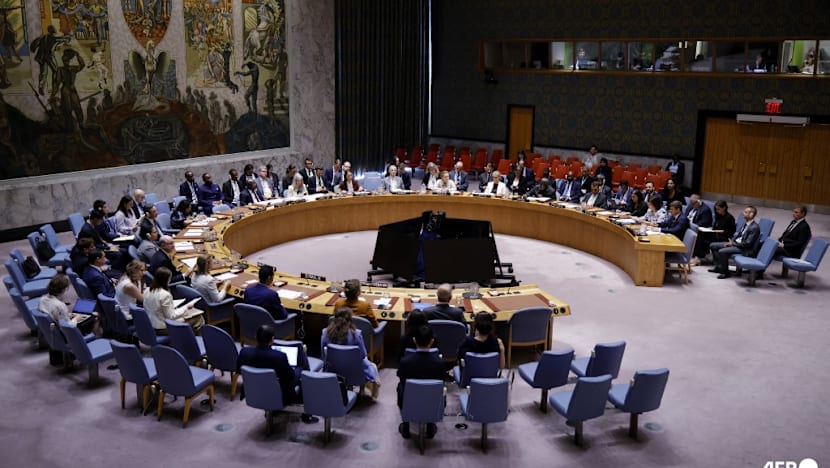
The United Nations Security Council convened Friday for a second informal straw poll, an exercise designed to gauge the standing of candidates seeking to become the world body's next leader. The process aims to identify a successor to Secretary-General Antonio Guterres, whose second five-year term concludes on December 31, 2026.
While the first straw poll set the scene for the Secretary-General race, the second may give us some direction about where it is headed.
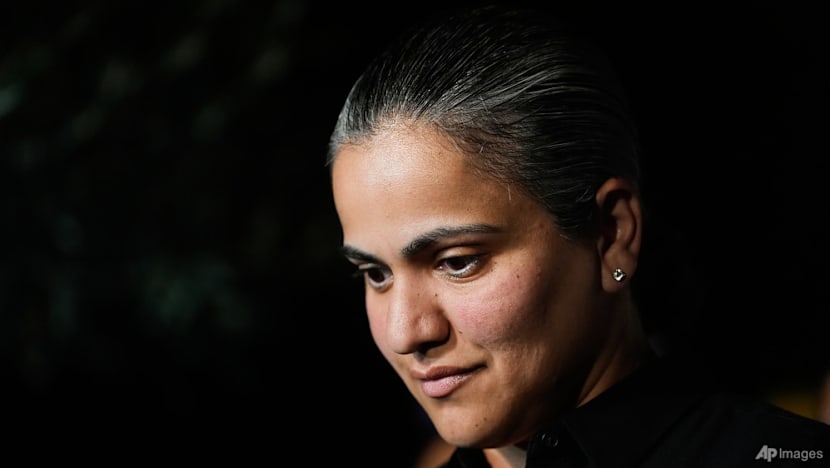
Following the initial informal vote last month, Rebeca Grynspan of Costa Rica emerged as the leading contender. The field of candidates is diverse, featuring prominent figures such as Rafael Grossi, the current head of the UN nuclear watchdog from Argentina, and Michelle Bachelet, a former president of Chile. Other notable candidates include Maria Fernanda Espinosa of Ecuador, Carolyn Rodrigues-Birkett of Guyana, Olara Otunnu of Uganda, and Macky Sall of Senegal. Ecuador's Ivonne A-Baki also joined the race after the first round.
Diplomats anticipate shifts in the voting patterns compared to the July poll. The focus will be on whether the initial front-runners can consolidate their support or if their positions weaken. "It is unlikely that any candidate will emerge from (Friday's) poll with a decisive lead," noted Daniel Forti of the International Crisis Group.
Diplomats expect fluctuations in the vote distribution compared to the July poll. Most will be watching to see whether the early front-runners consolidate their support or slip in the standings.
Forti also suggested that the five permanent members of the Security Council, Britain, China, France, Russia, and the United States, who hold veto power, might delay revealing their preferences. "If, for example... if there is a deadlock on any of the candidates we are seeing today, if nobody ... flies, then I think that we may see other candidates as well," stated Russia's UN Ambassador Vassily Nebenzia, speculating on the possibility of new contenders emerging.
It is unlikely that any candidate will emerge from (Friday's) poll with a decisive lead.
Even a candidate securing the necessary nine votes from the 15 council members must still avoid a veto from the major powers, who are reportedly deeply divided. The straw poll mechanism, devised in the early 1980s to break deadlocks, persists despite criticism over its opaque nature. "There is a good chance that some nominees realise after (Friday's) vote that their campaigns have reached the end of the road," Forti added.
If, for example - I'm speculating now - if there is a deadlock on any of the candidates we are seeing today, if nobody ... flies, then I think that we may see other candidates as well.
DistantNews Editorial
Originally published by CNA in English. Translated, summarized, and contextualized by our editorial team with added local perspective. Read our editorial standards.
More Stories


From Our Blog

What Gets Lost (and Found) When News Is Translated

The Critical Role of Diaspora Media in Global News

What Travellers Should Know About Countries with Restricted Press

A Digital Nomad's Guide to Following Local News

How the Same Story Looks Different in Different Countries
