


UNAM Develops Fertilizer From Nopal Waste to Reduce Agrochemical Use
Translated from Spanish, summarized and contextualized by DistantNews.
At a glance
News
Sources not specified
Context piece
- UNAM researchers developed a fertilizer from nopal cactus waste, showing potential to boost crop production and reduce agrochemical use.
- The fertilizer, derived from nopal spines and edges after anaerobic digestion, increased crop biomass by up to 20% and accelerated growth.
- This sustainable practice aims to revitalize volcanic soils in Mexico City and offers an alternative to synthetic fertilizers.
Researchers at Mexico's National Autonomous University (UNAM) have developed a novel fertilizer using waste from the nopal cactus, offering a promising avenue to enhance agricultural output while decreasing reliance on chemical agrochemicals. The innovative fertilizer, created from nopal spines and edges, has demonstrated an ability to increase crop biomass by up to 20% and significantly speed up plant growth.
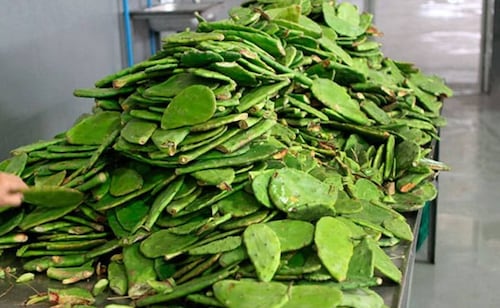
The residues of nopal that normally end up in the trash or in compost piles could become an alternative to increase agricultural production and reduce the use of agrochemicals.
The project, led by Bruno Chávez Vergara from UNAM's Institute of Geology, focuses on "nopal digestate," a byproduct generated after the anaerobic digestion of organic waste. This research, supported by the Mexico City government between 2018 and 2020, seeks to promote sustainable farming practices, particularly in the volcanic soils found in the southern part of the Mexico City basin.
Chávez Vergara explained that between 15% and 20% of processed nopal ends up as waste. While this material is already used for biogas production, the liquid residue it yields can be transformed into an effective organic fertilizer. The technology has been tested in agricultural areas of Milpa Alta, Xochimilco, and Tláhuac through collaboration with a local company that operates a nopal processing plant.
The research, financed between 2018 and 2020 by the Secretariat of Education, Science, Technology and Innovation of Mexico City, seeks to promote sustainable agricultural practices in the volcanic soils of the south of the Mexico City basin.
Unlike synthetic fertilizers that directly feed crops, the nopal digestate not only supplies essential mineral nutrients but also fosters beneficial soil bacteria and fungi. This microbial activity is crucial for restoring soil health, which has often been compromised by years of chemical fertilizer use. The liquid form of the fertilizer also allows for more efficient water use and quicker nutrient absorption by plants.
Between 15 and 20 percent of the nopal processed for consumption ends up as waste in the form of spines and edges.
Initial trials on forage oat crops in Milpa Alta yielded immediate results, with a 20% increase in biomass and a reduction of up to one month in plant maturation time observed within the first agricultural cycle. The UNAM team plans to expand these trials to other crops like corn and carrots, aiming to determine the optimal dosage for profitability and further promote this eco-friendly agricultural solution.
Unlike synthetic fertilizers, which directly nourish crops, this product also favors the microbial activity necessary to maintain the fertility of the land.
DistantNews Editorial
Originally published by El Universal in Spanish. Translated, summarized, and contextualized by our editorial team with added local perspective. Read our editorial standards.
More Stories
From Our Blog

What Press Freedom Means for the News You Read

What Gets Lost (and Found) When News Is Translated

The Critical Role of Diaspora Media in Global News

What Travellers Should Know About Countries with Restricted Press

A Digital Nomad's Guide to Following Local News
