


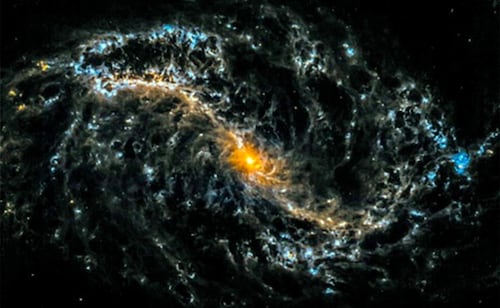
UNAM Scientists Map 100,000 Star Clusters to Uncover Stellar History
Translated from Spanish, summarized and contextualized by DistantNews.
At a glance
News
Sources not specified
Context piece
- Scientists from UNAM have created a map of 100,000 star clusters.
- This map aims to help understand the history and formation of stars.
- The project utilizes data to study stellar evolution and galactic structure.
Scientists at the National Autonomous University of Mexico (UNAM) have developed a comprehensive map detailing 100,000 star clusters. This ambitious project aims to shed light on the formation and evolutionary history of stars within our galaxy.
The creation of this detailed map represents a significant step in astronomical research. By cataloging such a large number of star clusters, researchers can analyze patterns and relationships that were previously difficult to discern. This data is crucial for understanding how stars are born, how they evolve over billions of years, and how they influence the structure and dynamics of the Milky Way.
The UNAM team's work is expected to provide valuable insights into stellar astrophysics. The map serves as a foundational tool for future studies, enabling astronomers to test theories about star formation and galactic evolution with greater precision. The project underscores Mexico's growing contributions to international space science.
DistantNews Editorial
Originally published by El Universal in Spanish. Translated, summarized, and contextualized by our editorial team with added local perspective. Read our editorial standards.
More Stories



From Our Blog

What Press Freedom Means for the News You Read

What Gets Lost (and Found) When News Is Translated

The Critical Role of Diaspora Media in Global News

What Travellers Should Know About Countries with Restricted Press

A Digital Nomad's Guide to Following Local News
