


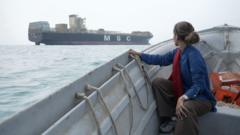
Uneasy calm returns to Strait of Hormuz as fishermen resume work amid lingering tensions
Translated from English, summarized and contextualized by DistantNews.
At a glance
News
Named sources
Outcome reported
- An uneasy calm has returned to the Strait of Hormuz following a US-Iran ceasefire agreement, allowing fishermen to resume their work.
- Two container ships seized by Iran's IRGC in April remain held, despite the ceasefire, with dozens of other cargo ships waiting offshore for passage.
- The Strait of Hormuz, a vital shipping lane, was rendered impassable by Iran's IRGC and a US blockade during the conflict, causing global oil price surges and disrupting trade.
Fishermen are returning to the Strait of Hormuz, unloading their catch of sharks and large fish on the docks of Bandar Abbas, Iran, weeks after a ceasefire agreement with the US allowed for the partial reopening of the vital shipping lane. This marks the first time international journalists have visited the Iranian side of the strait since the conflict began.
Shark sandwich is a local delicacy.
The Strait of Hormuz, a key focal point of the US-Iran conflict, was effectively made impassable in February when Iran's Islamic Revolutionary Guards Corps (IRGC) began firing on commercial ships. This action led to seafarers being stranded and a surge in global oil prices. The US retaliated with a blockade of Iranian Gulf ports, making the waters too dangerous for fishing for months.
My whole life I have been in love with America - the best country in the world, the dreamland, the land of opportunity.
Despite the ceasefire, two container ships seized by the IRGC in April, the MSC Francesca and the Epaminondas, have not been released. They were taken for allegedly endangering maritime security. Dozens of other cargo ships are visible offshore, awaiting permission from Iranian authorities to pass through the strait. The uneasy calm in the strait allows life to slowly return to normal for the local fishermen.
I feel like the American Dream is alive, but not well.
DistantNews Editorial
Originally published by BBC News in English. Translated, summarized, and contextualized by our editorial team with added local perspective. Read our editorial standards.
More Stories


From Our Blog

What Gets Lost (and Found) When News Is Translated

The Critical Role of Diaspora Media in Global News

What Travellers Should Know About Countries with Restricted Press

A Digital Nomad's Guide to Following Local News

How the Same Story Looks Different in Different Countries
