


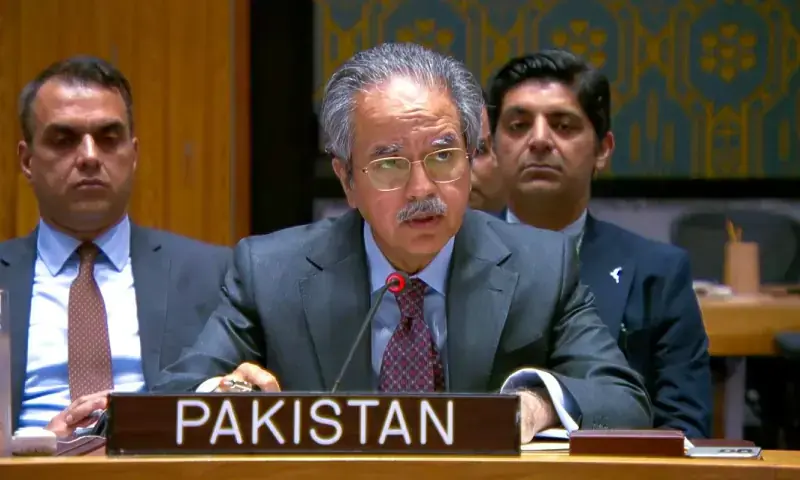
UNSC warned of threat to two-state solution
Summarized and contextualized by DistantNews.
At a glance
News
Named sources
Context piece
- UN Security Council members warned that Israeli settlement expansion threatens the two-state solution.
- Escalating violence and land seizures are dismantling prospects for peace, delegates said.
- The UN chief condemned the "relentless" expansion, citing the worst displacement crisis since 1967.
The United Nations Security Council heard urgent warnings on Monday that Israel's continued settlement expansion in occupied Palestinian territories is rapidly destroying the possibility of a two-state solution. Delegates highlighted escalating violence and land seizures as key factors dismantling peace prospects. Deputy UN Special Coordinator for the Middle East Peace Process Ramiz Alakbarov briefed the council on deteriorating humanitarian conditions in Gaza and rising tensions in the West Bank. He noted that the latest report on Resolution 2334 reaffirms that Israeli settlements in territories occupied since 1967 are a "flagrant violation" of international law. Pakistan's UN Ambassador Asim Iftikhar Ahmad described the recent developments as a "systemic pattern," pointing to the approval of 4,750 housing units and 34 settlements in the occupied West Bank. He criticized Israel's new online land registration system, warning it facilitates Palestinian dispossession and that the E-1 settlement project threatens to fragment the West Bank. UN chief Antonio Guterres also condemned the "relentless" expansion, stating in a report that it contributes to the territory's worst displacement crisis since 1967. He specifically warned against plans for the E1 area, which he said would severely impact the territorial contiguity of the Occupied Palestinian Territory and pose an existential threat to the two-state solution. Five European members of the Security Council, France, Britain, Greece, Latvia, and Denmark, issued a joint statement condemning the settlement activity and demanding an end to the expansion.
systemic pattern
DistantNews Editorial
Originally published by Dawn. Summarized and contextualized by our editorial team with added local perspective. Read our editorial standards.
More Stories


From Our Blog

What Gets Lost (and Found) When News Is Translated

The Critical Role of Diaspora Media in Global News

What Travellers Should Know About Countries with Restricted Press

A Digital Nomad's Guide to Following Local News

How the Same Story Looks Different in Different Countries
