


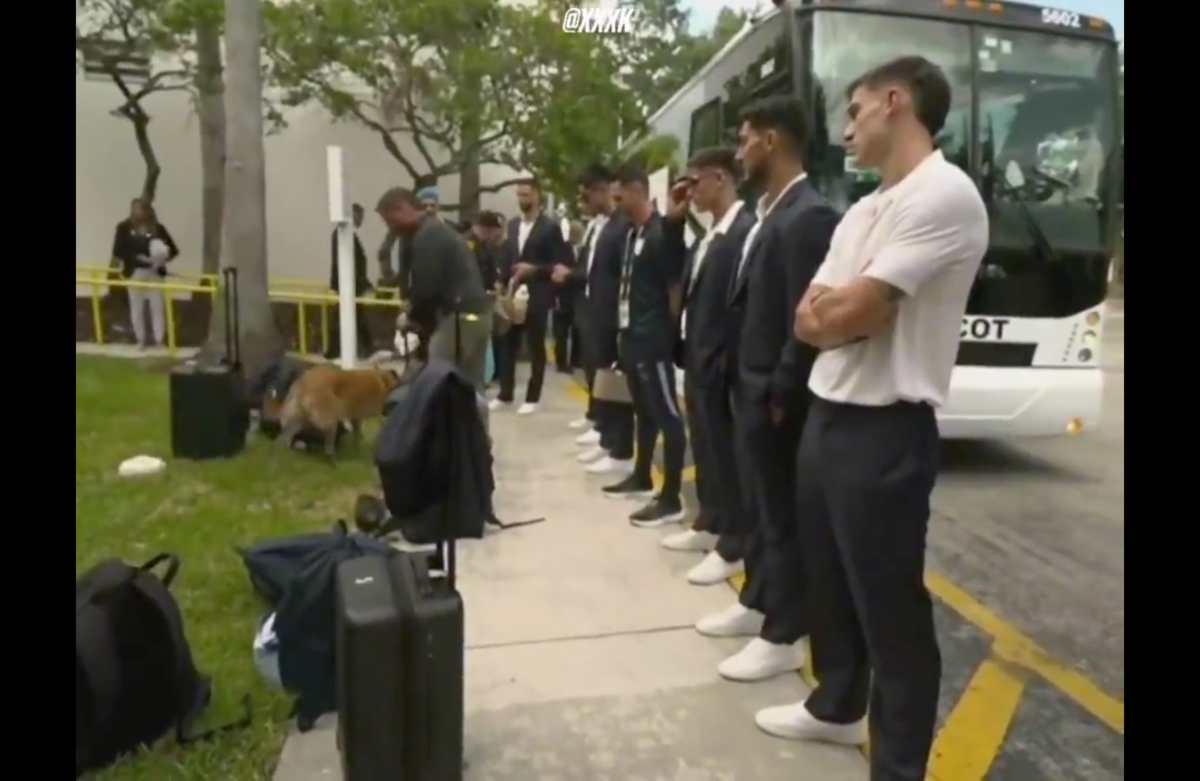
Uruguay's World Cup 2026 arrival complicated by security, delays
Translated from Spanish, summarized and contextualized by DistantNews.
At a glance
News
Sources not specified
Context piece
- Uruguay's arrival in the United States for the 2026 World Cup was complicated by strict security checks and logistical delays.
- The team faced baggage inspections, bus searches, and drug-sniffing dogs upon arrival in Fort Lauderdale, Florida.
- Despite the pre-match disruptions, Uruguay secured a 1-1 draw against Saudi Arabia in their opening Group H match.
Uruguay's journey to the 2026 World Cup began with a chaotic arrival in the United States, marked by stringent security measures and significant delays. Upon landing in Fort Lauderdale, Florida, the Uruguayan delegation was subjected to a thorough security operation. This included detailed baggage inspections, a search of the team bus, and the deployment of drug and explosive detection dogs, creating a scene that quickly circulated on social media.
The team's charter flight from Cancun, Mexico, also experienced administrative and documentation-related delays, further compressing their preparation time before their crucial World Cup debut. These security procedures and travel hiccups became a focal point of discussion surrounding Marcelo Bielsa's squad in the hours leading up to their first match.
Despite the logistical challenges, Uruguay managed to salvage a 1-1 draw against Saudi Arabia at the Miami (Hard Rock Stadium). Saudi Arabia took the lead in the 41st minute after a goalkeeping error by Fernando Muslera. However, Uruguay fought back in the second half, with Maximiliano Araújo scoring the equalizer in the 80th minute with a powerful shot from inside the box.
This result, while not a victory, gives Uruguay its first point in Group H, keeping their hopes of advancing to the next round alive. The team's performance, particularly in the second half, showed resilience after a first-half performance that raised questions about their cohesion.
DistantNews Editorial
Originally published by Prensa Libre in Spanish. Translated, summarized, and contextualized by our editorial team with added local perspective. Read our editorial standards.
More Stories

From Our Blog

What Gets Lost (and Found) When News Is Translated

The Critical Role of Diaspora Media in Global News

What Travellers Should Know About Countries with Restricted Press

A Digital Nomad's Guide to Following Local News

How the Same Story Looks Different in Different Countries
