


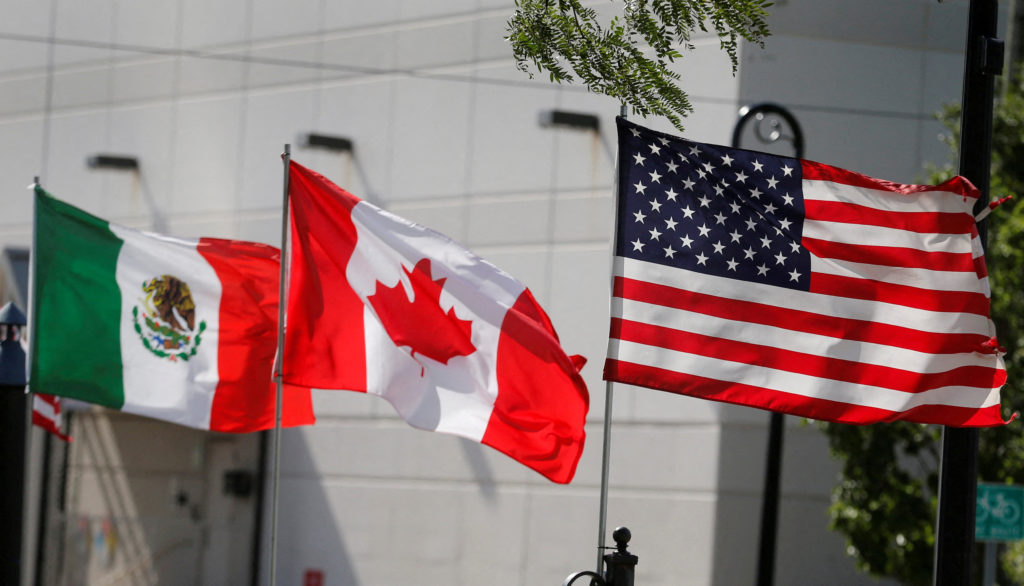
US and Canada in last-minute talks to avert 50% tariff deadline
Translated from English, summarized and contextualized by DistantNews.
At a glance
News
Named sources
Ongoing story
- The U.S. and Canada are engaged in intense, last-minute negotiations to avert a deadline for 50% tariffs on Canadian products.
- President Trump has threatened to impose the tariffs, valued at $20 billion, if no deal is reached by Wednesday morning.
- The negotiations aim to resolve long-standing trade disputes, including issues like softwood lumber and dairy market access.
The United States and Canada are locked in high-stakes, last-minute negotiations in Washington, D.C., in a critical effort to prevent the imposition of steep tariffs. U.S. President Donald Trump has threatened to slap a 50% tariff on approximately $20 billion worth of Canadian goods, ranging from sporting equipment to everyday items, if a trade truce is not secured before a Wednesday morning deadline.
Canadian Prime Minister Mark Carney described the ongoing talks as "very intense and delicate," emphasizing that this is "not the time to talk about negotiations in public." Carney and Trump spoke directly by phone on Monday afternoon, underscoring the urgency of the situation as both nations scramble to find common ground before the critical deadline.
These negotiations come after decades of trade friction between the two neighboring countries, encompassing contentious issues such as Canadian softwood lumber imports and U.S. access to Canada's protected dairy market. Despite these ongoing disputes, the U.S. and Canada have historically maintained a strong alliance, evidenced by their cooperation in Afghanistan and the open, undefended border that facilitates massive daily trade and travel.
We are negotiating. The negotiations are very intense and delicate. This is not the time to talk about negotiations in public.
Trump's aggressive trade stance marks a significant departure from the traditionally cooperative relationship. His administration has already imposed tariffs on Canadian goods as part of a broader strategy to boost U.S. manufacturing. The potential for further tariffs comes as the U.S. heads into midterm elections in November, and American voters are already grappling with the high cost of living, suggesting the administration might be wary of further price increases for consumers.
Both sides appear motivated to find an "off-ramp" from the escalating trade conflict. U.S. objectives reportedly include securing increased Canadian purchases of U.S. military equipment, such as F-35 fighters, and gaining greater access to critical minerals to reduce reliance on China. Canada, in turn, seeks relief from existing U.S. tariffs on steel, aluminum, and softwood lumber.
I don't think either side really wants these tariffs to come into effect. There's a pretty strong push on both sides to find an off ramp here.
DistantNews Editorial
Originally published by PBS NewsHour in English. Translated, summarized, and contextualized by our editorial team with added local perspective. Read our editorial standards.
More Stories


From Our Blog

How the Same Story Looks Different in Different Countries

What Gets Lost (and Found) When News Is Translated

The Critical Role of Diaspora Media in Global News

What Travellers Should Know About Countries with Restricted Press

A Digital Nomad's Guide to Following Local News
