


US and Canada in 'War' Over Tariffs as Trump Doctrine Fuels Trade Conflict
Translated from Korean, summarized and contextualized by DistantNews.
At a glance
News
Named sources
Context piece
- Canada and the United States are engaged in a trade war, with Canadian Prime Minister Mark Carney calling the U.S. retaliatory tariffs an act of 'war' after trade talks failed.
- The conflict escalated under former President Trump, who imposed escalating tariffs on Canadian goods, citing reasons like border control and trade imbalances, aiming to integrate Canada more closely into a U.S.-centric Western Hemisphere.
- Trump's administration is reportedly pressuring Canada to accept U.S. pre-approval for future trade deals, restrict imports from certain countries, and limit the use of French in product labeling, moves Canada views as a violation of its sovereignty.
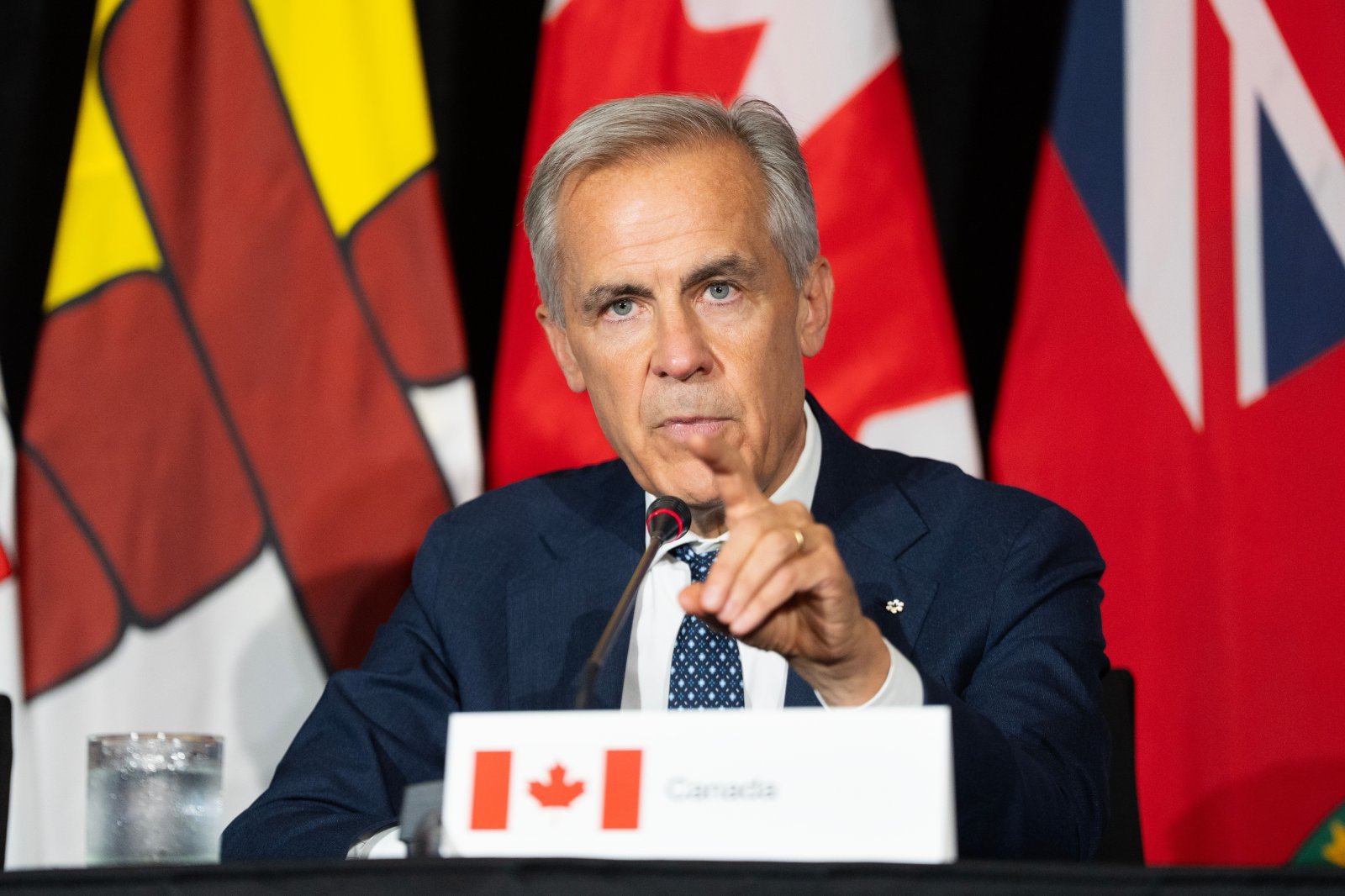
The long-standing alliance between the United States and Canada has fractured into a "war" over trade, according to Canadian Prime Minister Mark Carney. Following the collapse of trade negotiations, the U.S. imposed a 50% tariff on $20 billion worth of Canadian exports starting at midnight on August 22. Canada responded with equivalent retaliatory tariffs, prompting Carney to declare, "When you are attacked, you go to war. We have been attacked."
Former U.S. President Donald Trump, in a Truth Social post, suggested Canada desires the benefits of being a U.S. state without fulfilling the responsibilities. This exchange highlights a fundamental conflict beyond mere trade issues, signaling a deeper rift in bilateral relations.
When you are attacked, you go to war. We have been attacked.
The trade war intensified under Trump's administration. In early 2025, he threatened a 25% emergency tariff on imports from Canada and Mexico, citing fentanyl trafficking and inadequate border control. This move was part of a broader tariff strategy against global trade partners. Canada's then-government signaled immediate reciprocal tariffs, and Canadian provinces began boycotting American liquor sales, marking the official start of the trade conflict.
Trump's actions escalated, including a 25% tariff on Canadian steel, aluminum, and auto products, followed by an additional 35% tariff on Canadian goods not covered by the USMCA trade agreement. After the U.S. Supreme Court ruled against Trump's broad tariff measures in February, he invoked Section 338 of the 1930 Tariff Act on July 20. This allowed him to impose a 50% targeted tariff on $20 billion of Canadian goods, deeming Canadian regulations on U.S. liquor and dairy quotas discriminatory.
Canada wants the benefits of being a state without being a state.
Trump further announced on August 24 that tariffs on Canadian autos and steel would increase to 50% starting January 1, 2025. He referred to Canadian leaders like Carney as "idiots" who needed to be brought into line. Carney countered that Trump seemed intent on "destroying our major industries."
The U.S. wanted to restrict our ability to enter into other trade agreements.
Analysts suggest Trump's aggressive trade policy stems from his "Western Hemisphere First" doctrine, which prioritizes the Americas and seeks to exploit allies. This doctrine, outlined in the U.S. National Security Strategy, echoes the Monroe Doctrine and Roosevelt Corollary, asserting U.S. hegemony in the region. Trump has even floated the idea of annexing Canada as the "51st state."
The current trade dispute is seen as a manifestation of this doctrine. Carney revealed that the U.S. attempted to restrict Canada's ability to enter into other trade agreements, demanding pre-approval rights and veto power over Canada's future deals. The U.S. also reportedly pressured Canada to impose the same high tariffs on imports from countries like China and to set quotas on steel and aluminum imports from existing FTA partners. Furthermore, the U.S. allegedly sought to infringe on Canada's cultural and linguistic sovereignty by demanding limitations on French language use in product labeling and content, particularly in Quebec. Canada views these demands as a matter of sovereignty, with politicians like David Eby, Premier of British Columbia, warning that conceding would reduce Canada to an "economic 51st state."
It is a matter of sovereignty.
DistantNews Editorial
Originally published by Hankyoreh in Korean. Translated, summarized, and contextualized by our editorial team with added local perspective. Read our editorial standards.
More Stories


From Our Blog

What Gets Lost (and Found) When News Is Translated

The Critical Role of Diaspora Media in Global News

What Travellers Should Know About Countries with Restricted Press

A Digital Nomad's Guide to Following Local News

How the Same Story Looks Different in Different Countries
