


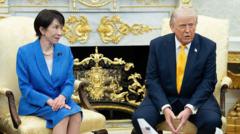
US and Japan jointly intervene to prop up yen in rare move
Summarized and contextualized by DistantNews.
At a glance
News
Named sources
New plan
- Japan and the United States jointly intervened to support the yen, marking the first coordinated action since 2011.
- The intervention aims to prevent the yen's slide from impacting the global economy and increasing borrowing costs for the U.S.
- The yen's weakness is attributed to Japan's lower central bank interest rates compared to economies like the U.S., alongside demographic and productivity challenges.
Japan and the United States have confirmed a rare joint intervention to halt the yen's slide to a fresh 40-year low. This coordinated action, the first since 2011 following Japan's earthquake and tsunami, signals a strong commitment from both nations to stabilize the currency.
countered excessive volatility and disorderly movements in the Japanese yen in recent months
Finance Ministry officials in Japan and U.S. Treasury Secretary Scott Bessent stated they would not hesitate to conduct further joint interventions. This move underscores their shared goal of preventing a yen sell-off from disrupting the global economy, including potentially raising borrowing costs for the U.S.
coordinated foreign exchange actions countered disorderly yen movements
The yen's historical weakness stems largely from Japan's significantly lower central bank interest rates compared to major economies like the U.S. This disparity makes the Japanese currency less attractive to international investors. The Bank of Japan recently raised its main rate to 1%, the highest since September 1995, yet this remains substantially lower than the U.S. Federal Reserve's benchmark rate, which is in the 3.50% to 3.75% range.
We strongly support Japan's decisive market and monetary steps to correct the substantial undervaluation of the yen
Japan also grapples with long-term demographic shifts, including a declining working-age population, low productivity, and a heavy reliance on energy imports priced in U.S. dollars. These factors contribute to the yen's vulnerability. The intervention on Friday was described by Japan's finance ministry as countering "excessive volatility and disorderly movements" in the yen. U.S. President Donald Trump also commented, stating, "They have a weakening yen, and they wanted a little bit of help. And we're always there for Japan."
They have a weakening yen, and they wanted a little bit of help. And we're always there for Japan
DistantNews Editorial
Originally published by BBC News. Summarized and contextualized by our editorial team with added local perspective. Read our editorial standards.
More Stories


From Our Blog

What Gets Lost (and Found) When News Is Translated

The Critical Role of Diaspora Media in Global News

What Travellers Should Know About Countries with Restricted Press

A Digital Nomad's Guide to Following Local News

How the Same Story Looks Different in Different Countries
