


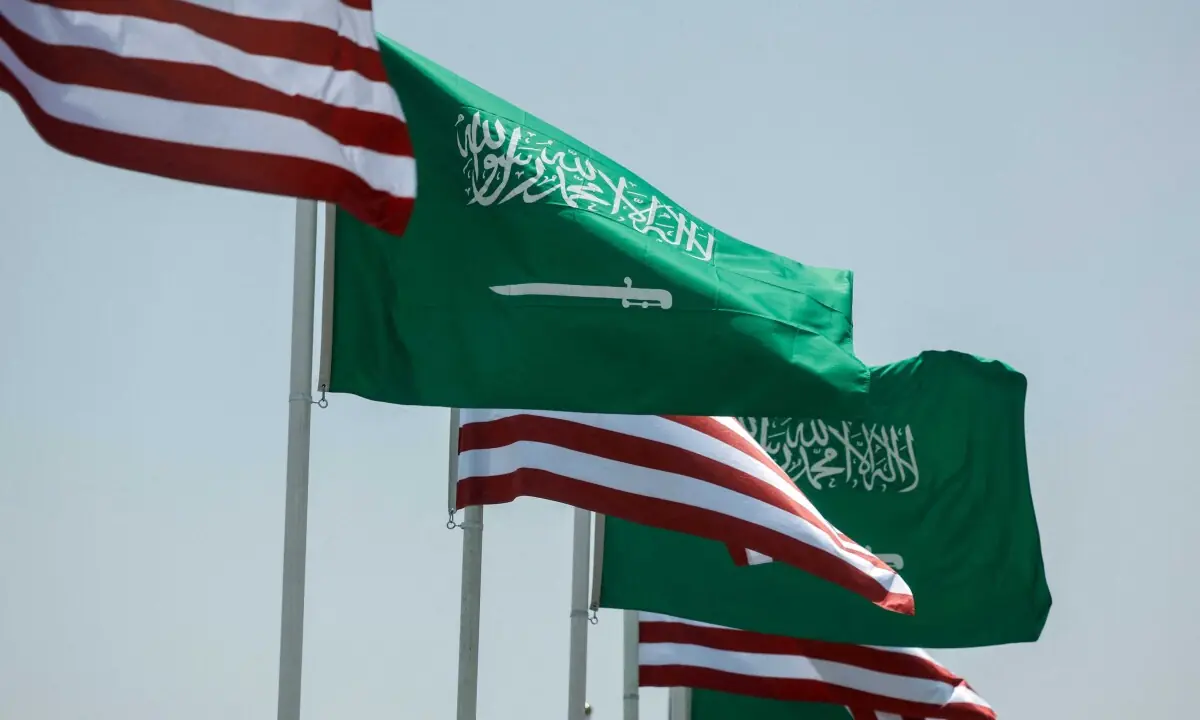
US announces civilian nuclear deal with Saudi Arabia, says it includes non-proliferation safeguards
Summarized and contextualized by DistantNews.
At a glance
News
Official statement
New plan
- The U.S. and Saudi Arabia have finalized a civilian nuclear cooperation deal, including non-proliferation safeguards.
- The agreement, signed by U.S. Energy Secretary Chris Wright and Saudi counterpart Prince Abdulaziz bin Salman, aims to establish a multi-billion-dollar partnership.
- While the deal potentially allows for a uranium enrichment facility in Saudi Arabia, the U.S. Energy Department did not confirm this detail, and it faces scrutiny from U.S. lawmakers and Israeli officials over proliferation concerns.
The United States has announced a significant civilian nuclear deal with Saudi Arabia, emphasizing that the agreement incorporates robust non-proliferation safeguards. This landmark accord establishes the framework for a long-term, multi-billion-dollar partnership aimed at advancing economic and strategic objectives for both nations.
U.S. Energy Secretary Chris Wright and Saudi Minister of Energy Prince Abdulaziz bin Salman signed two key agreements: one on "peaceful nuclear cooperation" and another on "bilateral safeguards." While the full text of these deals has not been publicly released, the U.S. Energy Department stated they lay the foundation for decades of collaboration.
Together, these two agreements lay the legal foundation for a decades-long, multi-billion-dollar partnership that advances several priority economic and strategic objectives, including nuclear non-proliferation.
Concerns have been raised by U.S. lawmakers and Israeli officials regarding the potential for Saudi Arabia to develop nuclear weapons. Reports suggest a provision in the deal could allow U.S. companies to build a uranium enrichment facility in the kingdom, a detail not explicitly mentioned by the Energy Department. The agreement will undergo a review by Congress, though its passage is considered likely given the Republican majority.
U.S. Energy Secretary Wright has sought to allay proliferation fears, asserting that the agreements uphold the highest standards of nuclear safety and non-proliferation, utilizing top-tier U.S. technology and expertise. The deal is structured under Section 123 of the U.S. Atomic Energy Act, which governs nuclear cooperation with other countries.
Rest assured, these agreements uphold the highest standards of nuclear safety and non-proliferation, while relying on the world’s best nuclear technology and scientists, designed right here in the United States.
DistantNews Editorial
Originally published by Dawn. Summarized and contextualized by our editorial team with added local perspective. Read our editorial standards.
More Stories
From Our Blog

What Gets Lost (and Found) When News Is Translated

The Critical Role of Diaspora Media in Global News

What Travellers Should Know About Countries with Restricted Press

A Digital Nomad's Guide to Following Local News

How the Same Story Looks Different in Different Countries
