


US Approves First Commercial Advanced Small Modular Nuclear Reactor in Wyoming
Translated from Korean, summarized and contextualized by DistantNews.
At a glance
In-depth
Named sources
Ongoing story
- TerraPower has received approval from the U.S. Nuclear Regulatory Commission to build its first commercial advanced small modular reactor (SMR) in Wyoming.
- The SMR, named "Kemmerer 1," uses a sodium-cooled fast reactor design, which operates at lower pressure and temperature than traditional water-cooled reactors.
- This project, backed by Bill Gates, involves significant partnerships with South Korean companies like SK Innovation and Korea Hydro & Nuclear Power.
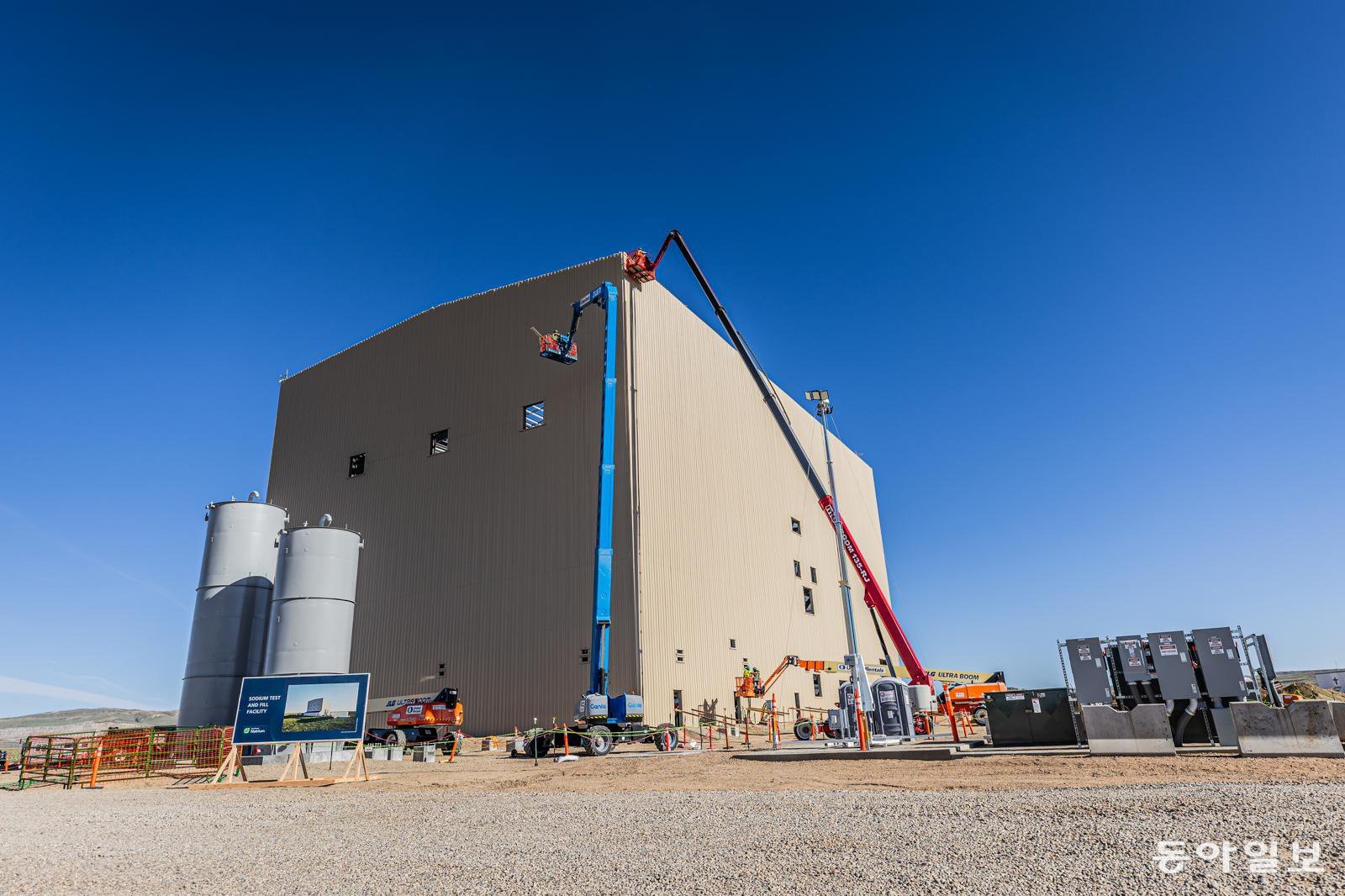
In the heart of Wyoming's rugged landscape, a new era of nuclear energy is dawning with TerraPower's advanced small modular reactor (SMR) project. Located near Kemmerer, the "Kemmerer 1" reactor site, once overshadowed by the coal-fired power plant, is now poised to become a hub for next-generation nuclear technology. TerraPower, founded by Microsoft co-founder Bill Gates, recently secured approval from the U.S. Nuclear Regulatory Commission (NRC) for its commercial advanced SMR, marking a significant step in the U.S. pursuit of innovative energy solutions.
Our next-generation reactor is about 1,000 times safer than conventional reactors.
The reactor employs a "sodium-cooled fast reactor" (SFR) design, a departure from traditional light-water reactors. Unlike conventional reactors that operate under high pressure and use water as a coolant, TerraPower's SMR uses liquid sodium, which remains stable at high temperatures (up to 880 degrees Celsius) and operates at near-atmospheric pressure. This design significantly enhances safety by eliminating the risk of hydrogen explosions associated with water-based coolants, as seen in the Fukushima disaster. The reactor vessel is also installed underground, further minimizing the potential spread of radioactive materials and reducing the emergency planning zone to approximately 300 meters, a stark contrast to the kilometers-wide zones around large-scale reactors.
The construction period and costs can be drastically reduced because modules are manufactured at the factory and only assembled on-site.
TerraPower CEO Chris Levesque highlighted the reactor's safety features, stating it is "about 1,000 times safer" than conventional reactors. The compact and modular design facilitates easier construction and potentially lower costs, especially with repeated deployments. This efficiency has attracted interest from major tech companies, with Meta reportedly considering up to eight of TerraPower's reactors to power its data centers. The project also signifies a strong international collaboration, with South Korean firms like SK Innovation, SK Inc., and Korea Hydro & Nuclear Power playing crucial roles as investors and partners in supplying components and technology.
Meta has chosen up to 8 of our reactors to supply power to its data centers and is currently selecting a site.
Despite the promising advancements, the project faces considerable challenges. The Kemmerer 1 reactor is still in its early construction phase, and its operational safety and economic viability are yet to be proven in commercial use. TerraPower is concurrently preparing to build approximately 12 reactors simultaneously once the first one is operational, requiring the establishment of a robust supply chain. Furthermore, like all nuclear projects, securing suitable sites and gaining local community acceptance remain significant hurdles. Levesque acknowledged the necessity of South Korean expertise, stating, "The U.S. has not built many reactors recently, so to complete the first project on time and scale up, we need the partnership with Korea."
This technology starts in the U.S., but Korea's manufacturing capabilities and technological contributions will be included in the Kemmerer and future reactors.
DistantNews Editorial
Originally published by Hankyoreh in Korean. Translated, summarized, and contextualized by our editorial team with added local perspective. Read our editorial standards.
More Stories


From Our Blog

What Gets Lost (and Found) When News Is Translated

The Critical Role of Diaspora Media in Global News

What Travellers Should Know About Countries with Restricted Press

A Digital Nomad's Guide to Following Local News

How the Same Story Looks Different in Different Countries
