

US Army conducts live-fire air defense drills in Palau, extending Indo-Pacific reach
Translated from Korean, summarized and contextualized by DistantNews.
At a glance
News
Official statement
Context piece
- U.S. Army's 35th Air Defense Artillery Brigade conducted live-fire missile training in Palau as part of a multinational exercise.
- The exercise, 'Tenacious Archer 2026,' aims to enhance air and missile defense capabilities in the Indo-Pacific region.
- The deployment demonstrates the U.S. military's ability to rapidly disperse and deploy air defense assets across the Indo-Pacific, strengthening its response to regional threats.
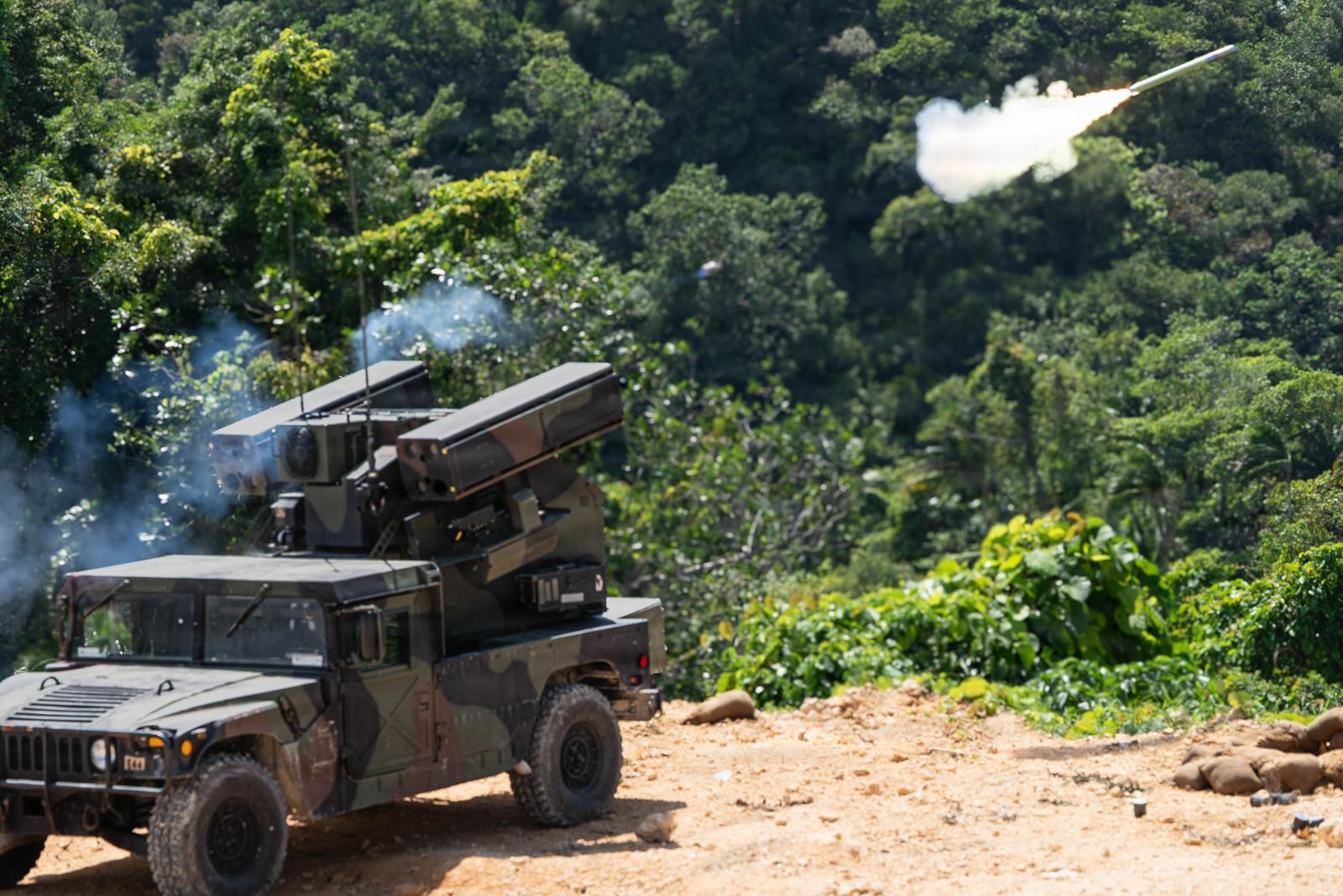
The U.S. Army's 35th Air Defense Artillery Brigade, stationed in South Korea, recently participated in multinational air defense drills in Palau, conducting live-fire training with its Avenger short-range air defense missile system. The exercise, dubbed 'Tenacious Archer 2026,' was organized by the U.S. Army Pacific Command and took place from July 10 to August 10 in the strategic island nation.
This deployment signifies a broader U.S. strategy to extend its air defense operations beyond the Korean Peninsula into the wider Indo-Pacific. Palau, situated between the Philippines and Guam, is considered a key strategic location for the U.S. military, enhancing its access and maneuverability in the Second Island Chain. This positioning is crucial for countering China's growing long-range missile and air power capabilities in the region.
The training involved elements from the 35th Air Defense Artillery Brigade, which is responsible for defending South Korea against aerial threats from North Korea. Their participation in drills thousands of kilometers away in Palau highlights the U.S. military's capacity to swiftly deploy and integrate air defense forces across the Indo-Pacific theater. This capability is vital for testing and refining the U.S. concept for Indo-Pacific air and missile defense operations.
U.S. Army Pacific stated that the exercise's objectives include strengthening air and missile defense, fostering cooperation, and enhancing interoperability to promote the shared interest of a free and open Indo-Pacific. Analysts suggest that the successful deployment of South Korea-based air defense assets to Palau demonstrates the potential for increased "strategic flexibility" for U.S. forces, enabling them to operate effectively beyond the Korean Peninsula and contribute to broader regional security efforts, particularly in light of China's military buildup.
The exercise aims to enhance air and missile defense, cooperation, and interoperability, thereby promoting the shared interest of a free and open Indo-Pacific.
DistantNews Editorial
Originally published by Dong-A Ilbo in Korean. Translated, summarized, and contextualized by our editorial team with added local perspective. Read our editorial standards.
More Stories


From Our Blog

What Gets Lost (and Found) When News Is Translated

The Critical Role of Diaspora Media in Global News

What Travellers Should Know About Countries with Restricted Press

A Digital Nomad's Guide to Following Local News

How the Same Story Looks Different in Different Countries
