


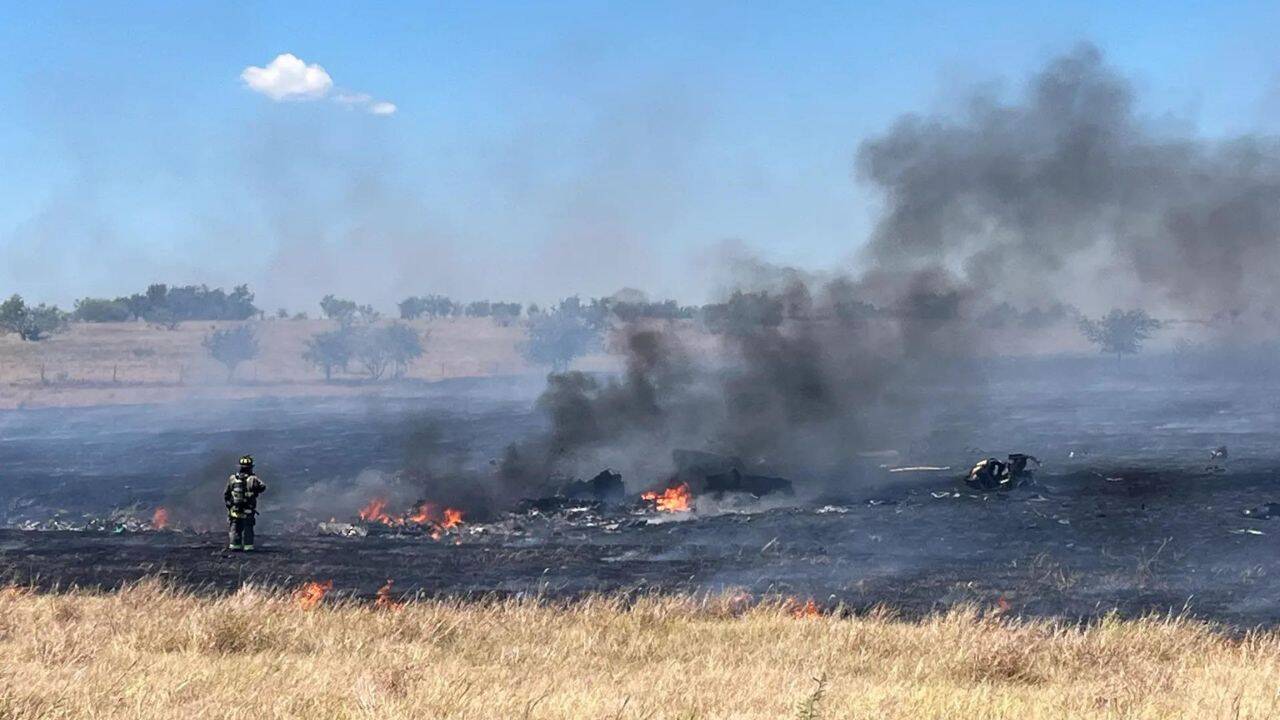
US Army grounds Apache training after fatal Texas crash
Translated from English, summarized and contextualized by DistantNews.
At a glance
News
Official statement
Under investigation
- The US Army has temporarily halted all Apache helicopter training missions following a fatal crash in Texas.
- The grounding will continue until the root cause of the accident is understood.
- Two soldiers were killed in the crash near Salado, Texas.
The U.S. Army has grounded its entire fleet of Apache helicopter training missions in response to a fatal crash that claimed the lives of two soldiers in Texas earlier this week. The decision, announced Friday, aims to ensure the safety of personnel and understand the circumstances leading to the incident.
"The stand-down will remain in effect until we have a better understanding of the root cause of the accident," the Army stated. The investigation into the crash, which occurred near Salado, Texas, is in its initial stages. A safety investigation team from the Army Combat Readiness Center is examining the scene and gathering information.
The Army clarified that this suspension applies only to training exercises and does not affect ongoing Apache combat operations, particularly those near the Strait of Hormuz. This is not the first time the Army has paused aviation operations due to safety concerns. In 2023, all aviation units were grounded after a series of 12 fatal crashes across Alaska and Kentucky.
The victims were identified as Chief Warrant Officer 2 Deontre T. Huey, 34, and Warrant Officer Seth L. Olmstead, 25. Both were assigned to Bravo Company, 1st Battalion, 227th Aviation Regiment. The Army has faced previous scrutiny over its aviation safety practices, including criticism from the National Transportation Safety Board following a 2025 collision involving a Black Hawk helicopter.
The stand-down will remain in effect until we have a better understanding of the root cause of the accident.
DistantNews Editorial
Originally published by Times of India in English. Translated, summarized, and contextualized by our editorial team with added local perspective. Read our editorial standards.
More Stories


From Our Blog

What Press Freedom Means for the News You Read

What Gets Lost (and Found) When News Is Translated

The Critical Role of Diaspora Media in Global News

What Travellers Should Know About Countries with Restricted Press

A Digital Nomad's Guide to Following Local News
