


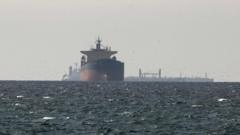
US conducts strikes on Iran after attack on cargo ship
Summarized and contextualized by DistantNews.
At a glance
News
Official statement
Ongoing story
- The U.S. military conducted strikes on Iranian missile and drone storage facilities and coastal radar positions.
- The strikes were in response to an Iranian drone attack on a cargo ship in the Strait of Hormuz.
- The incident occurred shortly after the U.S. and Iran agreed to a truce, raising questions about the ceasefire's stability.
The United States military launched strikes against Iranian targets, including missile and drone storage facilities and coastal radar positions, in retaliation for an earlier drone attack on a cargo ship. The U.S. Central Command described the action as a "powerful response" to what it called "unwarranted aggression against commercial shipping." President Donald Trump accused Iran of a "foolish violation" of its truce following the drone attack on Thursday. No casualties were reported from the ship incident, but it prompted the planned evacuation of over 11,000 sailors in the region. The U.S. military stated that Iran's actions "undermined freedom of navigation" through the vital international trade corridor. This escalation follows a recent agreement between the U.S. and Iran on June 17 to end hostilities under a 14-point memorandum of understanding. The truce included a provision for Iran to ensure the safe passage of commercial vessels for 60 days. President Trump, speaking to reporters, expressed his displeasure with the Iranian action, stating, "I don't like the fact that they took a shot yesterday. They shouldn't be doing that." It remains unclear whether these U.S. strikes are an isolated event or part of a broader response. Tensions have been high in the Strait of Hormuz, a critical waterway for global energy supplies. Previous U.S. and Israeli actions against Iran led to Tehran effectively closing the strait, causing a spike in oil prices and disrupting commodity shipments. The U.S. has condemned reports of Iran charging fees to tankers, viewing such a system as a violation of international maritime law.
you'll see
DistantNews Editorial
Originally published by BBC News. Summarized and contextualized by our editorial team with added local perspective. Read our editorial standards.
More Stories



From Our Blog

What Gets Lost (and Found) When News Is Translated

The Critical Role of Diaspora Media in Global News

What Travellers Should Know About Countries with Restricted Press

A Digital Nomad's Guide to Following Local News

How the Same Story Looks Different in Different Countries
