


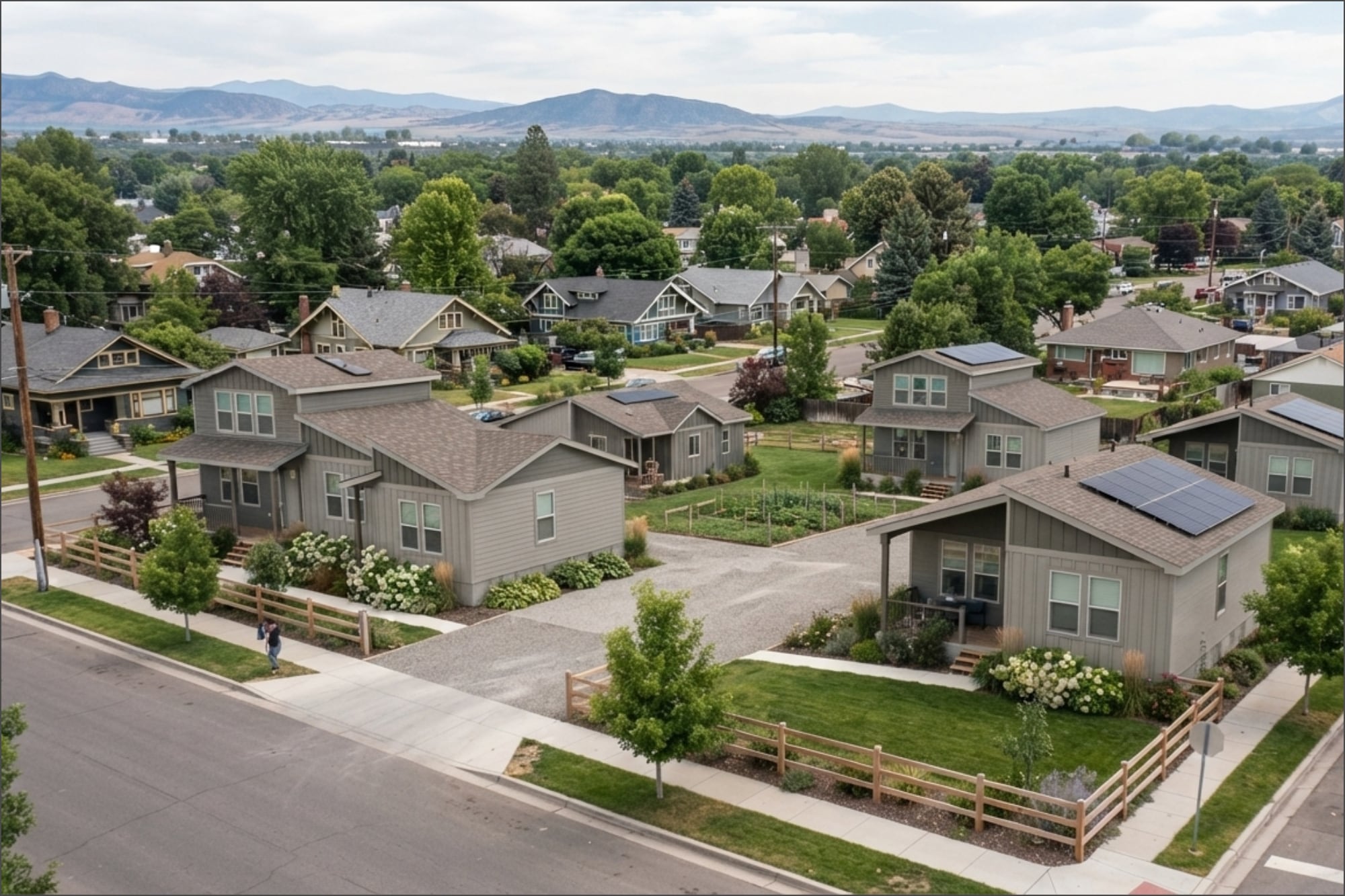
US Congress passes bill to boost prefabricated home access amid affordability crisis
Translated from Spanish, summarized and contextualized by DistantNews.
At a glance
News
Named sources
New plan
- The U.S. Congress passed a bill to increase the supply of prefabricated homes and address affordability issues.
- The legislation aims to reduce costs by eliminating certain construction requirements, potentially saving $5,000 to $10,000 per home.
- The bill's passage faced a delay as former President Donald Trump withheld his signature, pending other legislative actions.
A new bill passed by the U.S. Congress seeks to make prefabricated homes more accessible and boost their availability to combat a housing affordability crisis. The "21st Century Housing Act" introduces significant changes to promote the widespread adoption of prefabricated housing, positioning it as a solution to rising costs.
Key to the legislation is the removal of federal requirements that mandated these homes be built on a chassis with wheels. This rule, in place for five decades, not only increased expenses but also restricted where these homes could be located. By eliminating this constraint, prefabricated houses can now more closely resemble traditional constructions. The Bipartisan Policy Center estimates this change could lower the price of each home by $5,000 to $10,000.
Furthermore, the bill proposes that regulators overseeing modular housing should not impose greater financial obstacles compared to traditional homes. This aims to simplify the process for buyers seeking loans. Prefabricated or manufactured homes are increasingly seen as an accessible housing alternative, and this new law directly addresses cost barriers to facilitate easier access for citizens.
While approved by both chambers of Congress, the bill's enactment was pending presidential action. Former President Donald Trump indicated he would not sign the initiative until Congress passed the SAVE America Act, a provision related to citizenship testing requirements for voting. The constitutional deadline for Trump to sign or veto the bill is July 10, 2026. If he took no action and Congress remained in session, the measure could become law without his signature.
DistantNews Editorial
Originally published by La Nación in Spanish. Translated, summarized, and contextualized by our editorial team with added local perspective. Read our editorial standards.
More Stories



From Our Blog

What Gets Lost (and Found) When News Is Translated

The Critical Role of Diaspora Media in Global News

What Travellers Should Know About Countries with Restricted Press

A Digital Nomad's Guide to Following Local News

How the Same Story Looks Different in Different Countries
