


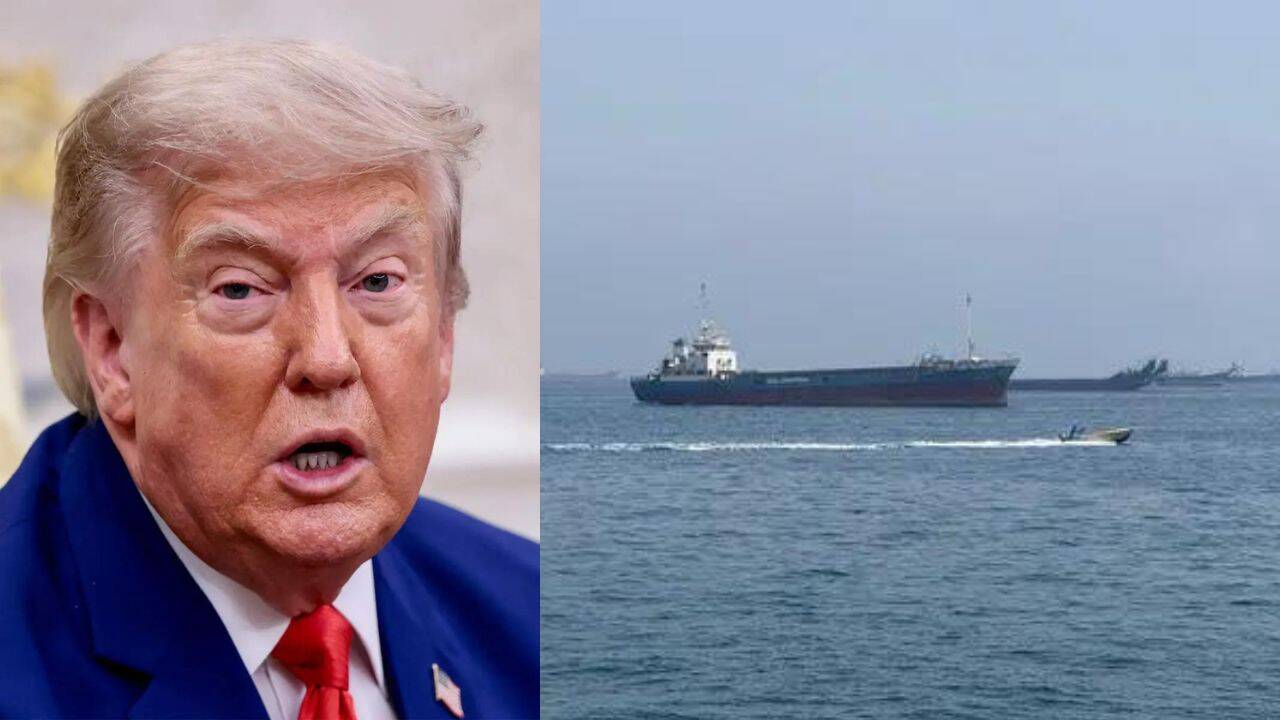
US deploys over 20 warships to enforce Iran blockade, redirects 55 vessels
Translated from English, summarized and contextualized by DistantNews.
At a glance
News
From a news agency
Context piece
- Over 20 U.S. warships are deployed in the Middle East to enforce a naval blockade against Iran, according to U.S. Central Command (CENTCOM).
- CENTCOM reported redirecting 55 commercial vessels, disabling two, and boarding two others as part of the operation.
- The U.S. military is also allowing vessels carrying humanitarian aid to pass through the blockade, while President Trump indicated a preference for economic pressure over further military action.
The U.S. military has deployed more than 20 warships to the Middle East to maintain a naval blockade against Iran, U.S. Central Command (CENTCOM) announced. These forces are actively enforcing Washington's sanctions, which include strict maritime measures.
US Sailors stand watch on the bridge of USS Ross (DDG 71). Ross is one of over 20 U.S. warships deployed to the Middle East supporting military missions, including strict enforcement of the US blockade against Iran.
CENTCOM stated that as of August 9, its operations had resulted in 55 commercial vessels being redirected, two being disabled, and two being boarded to ensure compliance with the blockade. These figures represent a slight increase from previous reports. The U.S. military has, however, permitted more than 30 ships carrying humanitarian aid to transit the blockade, indicating a selective approach to the enforcement.
As of Aug. 9, CENTCOM has redirected 55 commercial vessels, disabled 2, and boarded 2 to ensure compliance
The maritime operations are occurring amidst heightened tensions in the Strait of Hormuz, a critical chokepoint for global oil shipments. President Donald Trump has signaled a preference for economic pressure over further military confrontation with Iran. According to Axios, Trump described the U.S. approach as "low keying it" and indicated that the U.S. is "semi-negotiating" while closely monitoring Iran's economic situation, particularly its high inflation and lack of funds.
We are low keying it
These developments follow earlier reports from The Wall Street Journal suggesting that the Trump administration might be willing to de-escalate the military confrontation by setting aside the nuclear issue if Tehran fully reopens the Strait of Hormuz. Meanwhile, Vice President JD Vance has stated that Washington is working to establish safe transit routes for commercial vessels through the Strait of Hormuz while continuing to exert pressure on Iran.
We are just watching Iran with its huge inflation and the fact they have no money
DistantNews Editorial
Originally published by Times of India in English. Translated, summarized, and contextualized by our editorial team with added local perspective. Read our editorial standards.
More Stories

From Our Blog

What Press Freedom Means for the News You Read

What Gets Lost (and Found) When News Is Translated

The Critical Role of Diaspora Media in Global News

What Travellers Should Know About Countries with Restricted Press

A Digital Nomad's Guide to Following Local News
