


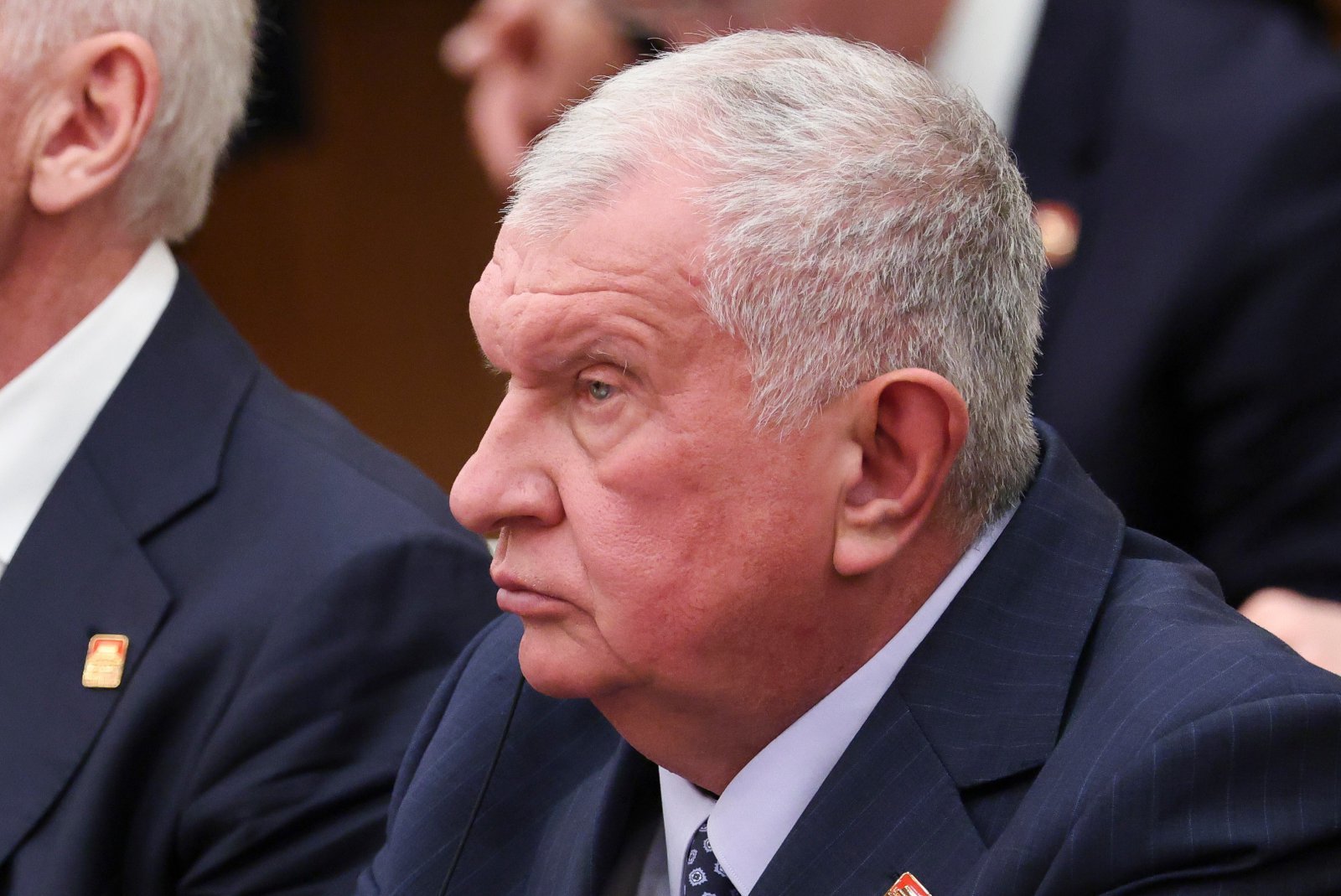
US energy firms biggest winners from Hormuz blockade, says Russian oil CEO
Translated from Korean, summarized and contextualized by DistantNews.
At a glance
News
Sources not specified
Context piece
- Russian state oil company CEO Igor Sechin claims the US will be the biggest beneficiary of any Strait of Hormuz closure.
- Sechin argued that closing the strait would reshape global energy markets to favor American firms, giving them a competitive advantage.
- He also warned that prolonged tensions could reduce long-term oil demand and increase interest in alternative energy sources, while China is well-prepared for such a crisis.
Igor Sechin, CEO of Russia's state-owned oil giant Rosneft, asserted that U.S. energy companies stand to gain the most from any potential closure of the Strait of Hormuz. Speaking at the St. Petersburg International Economic Forum, Sechin suggested that such a move would be an attempt to reorganize global energy market regulations to benefit the United States.
The measures taken to blockade the strait were aimed at Iran, but they have backfired globally. Strategic risks were underestimated.
"The measures taken to blockade the strait were aimed at Iran, but they have backfired globally," Sechin stated, adding that "strategic risks were underestimated." He elaborated that American companies would secure a "non-competitive advantage" and the ability to acquire high-priced raw materials. Sechin also predicted that prolonged tensions in the Strait of Hormuz could dampen long-term oil demand, potentially reviving interest in alternative energy sources.
Sechin highlighted China's preparedness for such crises, attributing it to "carefully planned national policies." He projected that if the strait were to reopen, international oil prices could reach $95-$96 per barrel by year-end, falling to $80-$85 within a year, and stabilizing in late 2027. China has been noted for purchasing large volumes of discounted Russian crude oil amid U.S. sanctions.
Of course, the biggest beneficiaries are American companies. They gain a non-competitive advantage and the ability to acquire high-priced raw materials.
The Rosneft CEO further cautioned that other global shipping routes, including the Strait of Malacca, Bab-el-Mandeb Strait, and Strait of Gibraltar, could also face disruption risks. The article notes that Iran, following the death of its supreme leader Ayatollah Ali Khamenei in a targeted attack by the U.S. and Israel in February, had previously blockaded the Strait of Hormuz, a critical route for about a fifth of global supply. The U.S. responded with counter-blockades of Iranian ports. Sechin is described as a close associate of Russian President Vladimir Putin and a highly influential figure in the Russian energy sector.
China has prepared best for this crisis thanks to carefully planned national policies.
DistantNews Editorial
Originally published by Dong-A Ilbo in Korean. Translated, summarized, and contextualized by our editorial team with added local perspective. Read our editorial standards.
More Stories
From Our Blog

What Gets Lost (and Found) When News Is Translated

The Critical Role of Diaspora Media in Global News

What Travellers Should Know About Countries with Restricted Press

A Digital Nomad's Guide to Following Local News

How the Same Story Looks Different in Different Countries
