


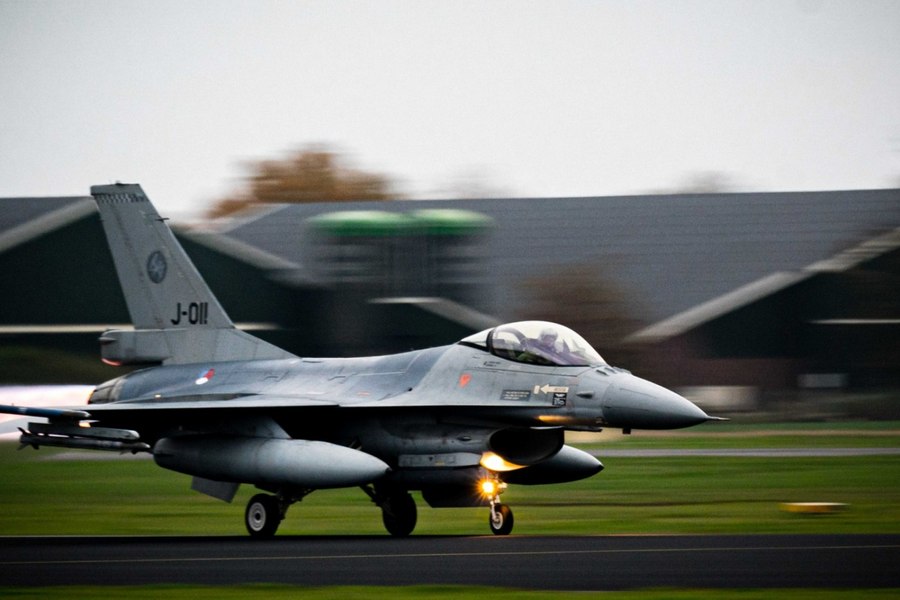
US F-35 Fleet Faces Readiness Crisis Amid Parts Shortage
Translated from Romanian, summarized and contextualized by DistantNews.
At a glance
News
Official statement
Context piece
- The operational readiness of the U.S. F-35 fighter jet fleet is declining due to persistent maintenance issues, a shortage of spare parts, and technical difficulties.
- A Government Accountability Office report indicates F-35 combat readiness has worsened, with full mission capable rates dropping significantly.
- The Pentagon's $13.7 billion plan to modernize the fleet faces risks, including reliance on private contractors and rising operational costs.
The U.S. F-35 fighter jet fleet is facing a critical decline in operational readiness, hampered by ongoing maintenance problems, a scarcity of spare parts, and technical challenges, according to a new report from the U.S. Congress's governmental watchdog institution.
The F-35 Lightning II program, developed by Lockheed Martin, stands as the most expensive military project in Pentagon history, with total acquisition and lifetime operating costs estimated to exceed $2 trillion.
The Government Accountability Office (GAO) report reveals a deteriorating combat capability for the F-35s. Mission-ready rates, the percentage of time an aircraft can perform at least one operational mission, fell from 67% in fiscal year 2021 to 44% in 2025. Full mission capable rates, indicating an aircraft's ability to execute all its designed missions, plummeted from 38% to just 25%. This means only one in four F-35s was fully prepared for its entire operational spectrum last year.
Key factors contributing to this decline include delays in spare parts delivery, software issues, and extended maintenance durations, leaving a substantial number of aircraft unavailable for prolonged periods. The Pentagon initiated a $13.7 billion modernization and readiness enhancement plan in 2025, aiming to improve fleet preparedness by the end of the decade. However, GAO auditors caution that the program may require additional funding and faces significant risks, such as heavy reliance on private contractors, limited parts production capacity, and escalating operational expenses.
The GAO also scrutinizes the Defense Department's incentive system for contractors. Despite financial bonuses and incentives for improving fleet performance, the current structure does not guarantee that these payments translate into actual increases in aircraft availability. Auditors warn that companies might receive rewards even if the program's operational objectives are not met.
DistantNews Editorial
Originally published by Adevărul in Romanian. Translated, summarized, and contextualized by our editorial team with added local perspective. Read our editorial standards.
More Stories



From Our Blog

What Gets Lost (and Found) When News Is Translated

The Critical Role of Diaspora Media in Global News

What Travellers Should Know About Countries with Restricted Press

A Digital Nomad's Guide to Following Local News

How the Same Story Looks Different in Different Countries
