

US Fed keeps key rate steady, signals new era under Warsh
Summarized and contextualized by DistantNews.
At a glance
News
Sources not specified
New plan
- The US Federal Reserve maintained its benchmark interest rate at 3.50-3.75 percent, concluding its first FOMC meeting under new chair Kevin Warsh.
- The decision was influenced by persistent inflation, a strong labor market, and geopolitical uncertainty, complicating the Fed's goal of price stability.
- Strong productivity growth and capital investment were noted, but inflation remains above the Fed's 2 percent target.
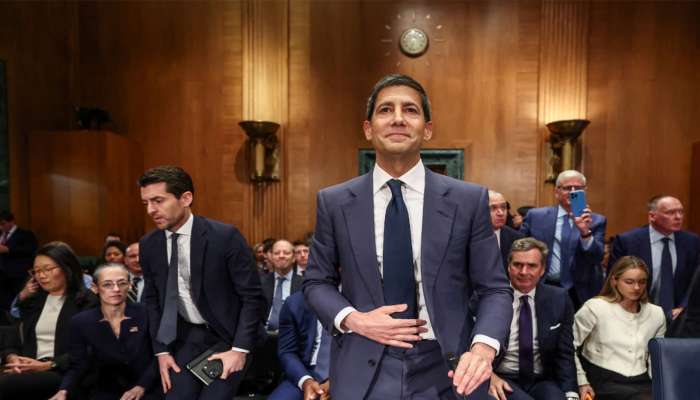
The U.S. Federal Reserve held its benchmark interest rate steady at 3.50-3.75 percent on Wednesday, marking the first Federal Open Market Committee (FOMC) meeting chaired by Kevin Warsh since he took the helm last month. This decision comes amid a complex economic landscape characterized by persistent inflation, a resilient labor market, and heightened geopolitical tensions, all of which challenge the Fed's objective of restoring price stability.
Despite these pressures, the Fed acknowledged robust productivity growth and strong capital investment. In its post-meeting statement, the committee noted that job gains have kept pace with workforce expansion, and the unemployment rate has remained largely unchanged. However, inflation continues to be a significant concern, with consumer prices rising 4.2 percent year-on-year in May, well above the Federal Reserve's 2 percent target and marking the highest level in three years.
Productivity growth and capital investment are both strong. Economic activity is expanding at a solid pace despite elevated uncertainty. Persistent high prices are a burden for the American people. I have refrained from projections of my own.
Investors closely watched the meeting for any signals of a shift in monetary policy, particularly through updated economic projections and changes to the post-meeting statement. The June meeting served as an important test for Warsh, who assumed leadership amidst ongoing debates about the future direction of U.S. monetary policy. Recent economic data have presented a mixed picture, with a strong labor market contrasting with elevated inflation. The policy discussion has also been influenced by geopolitical developments, particularly rising energy prices linked to tensions in West Asia, although fears of renewed inflationary pressures have recently moderated.
Attention now shifts to Warsh's inaugural press conference, where market participants will seek greater clarity on his strategy for navigating the competing challenges of high inflation and steady economic expansion. The Fed's updated Summary of Economic Projections, including the closely watched "dot plot," will be scrutinized for insights into the future path of interest rates.
Productivity growth and capital investment are strong. Job gains have kept pace with the workforce, and the unemployment rate has changed little.
DistantNews Editorial
Originally published by Times of Oman. Summarized and contextualized by our editorial team with added local perspective. Read our editorial standards.
More Stories


From Our Blog

What Gets Lost (and Found) When News Is Translated

The Critical Role of Diaspora Media in Global News

What Travellers Should Know About Countries with Restricted Press

A Digital Nomad's Guide to Following Local News

How the Same Story Looks Different in Different Countries
