


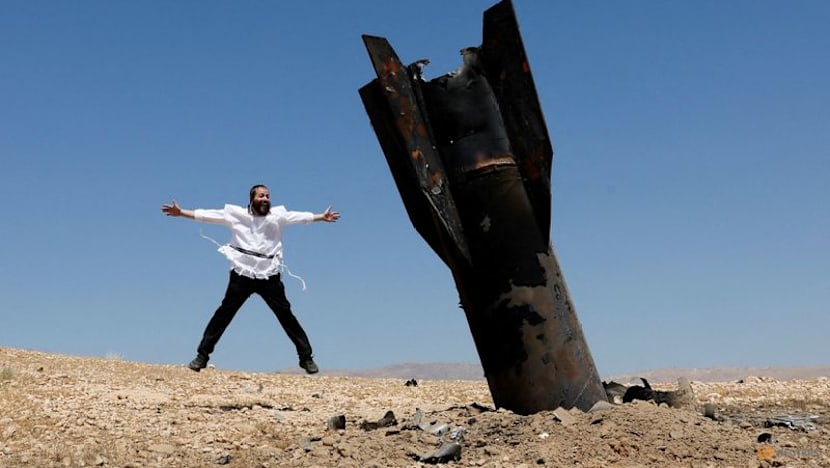
US, Iran exchange strikes as diplomacy shifts to conflict management
Translated from English, summarized and contextualized by DistantNews.
At a glance
Analysis
Sources not specified
Context piece
- The US military struck Iran on Tuesday in response to the downing of a US Army helicopter, with Iran retaliating with strikes on US bases in Bahrain and Jordan.
- The incidents occurred days after Iran and Israel exchanged tit-for-tat strikes, highlighting a shift where diplomacy and conflict now unfold simultaneously.
- This new dynamic suggests diplomacy is increasingly used to manage conflicts rather than end them, as parties avoid full-scale war while protecting security interests.
The United States military launched strikes against Iran on Tuesday in response to the downing of a US Army helicopter near the Strait of Hormuz a day earlier. The US military described these strikes as a "proportional response to unjustified Iranian aggression." This action followed President Donald Trump's claims of being close to a "very, very good deal" to end the war.
a proportional response to unjustified Iranian aggression
Iran swiftly retaliated, with its Islamic Revolutionary Guard Corps announcing strikes on US bases in Bahrain and Jordan. The IRGC also warned of "even more severe attacks" if the US repeated its strikes. This episode took place just days after Israel and Iran had briefly engaged in direct conflict, triggered by Israeli operations against Hezbollah in Lebanon. Despite a supposed ceasefire, both sides exchanged various rounds of strikes before announcing a halt to hostilities.
These incidents appear contradictory at first glance, as diplomacy is typically seen as an alternative to war and ceasefires as a means to reduce violence. However, with the US, Israel, and Iran exchanging attacks, and military operations continuing in Lebanon despite ceasefire arrangements, diplomacy and conflict are increasingly unfolding simultaneously. For decades, policymakers assumed war and diplomacy were distinct phases, with negotiations preceding conflict and eventually leading back to talks. The 1973 Arab-Israeli war and the subsequent Camp David Accords exemplified this model, where diplomacy served as an exit ramp from conflict.
final throes of what will be a very, very good deal
This traditional model is becoming unrecognizable in the Middle East, which is now characterized by a different dynamic. Negotiations between warring parties continue during military confrontations, ceasefires coexist with airstrikes, and mediators shuttle between capitals even as threats escalate. The issue is not that diplomacy is failing, but rather that it is no longer serving its traditional purpose. Instead of ending conflicts, diplomacy is now helping to manage them. This distinction is significant because a managed conflict is not necessarily a resolved one. The latest escalations between Israel and Iran, and now Iran and the US, illustrate this dilemma. None of these parties appears to desire a full-scale regional war due to the enormous costs and unpredictable consequences. Yet, each is unwilling to abandon what they perceive as vital security interests. Israel, for instance, views Hezbollah’s military capabilities as a major threat.
even more severe attacks
DistantNews Editorial
Originally published by CNA in English. Translated, summarized, and contextualized by our editorial team with added local perspective. Read our editorial standards.
More Stories



From Our Blog

What Gets Lost (and Found) When News Is Translated

The Critical Role of Diaspora Media in Global News

What Travellers Should Know About Countries with Restricted Press

A Digital Nomad's Guide to Following Local News

How the Same Story Looks Different in Different Countries
