


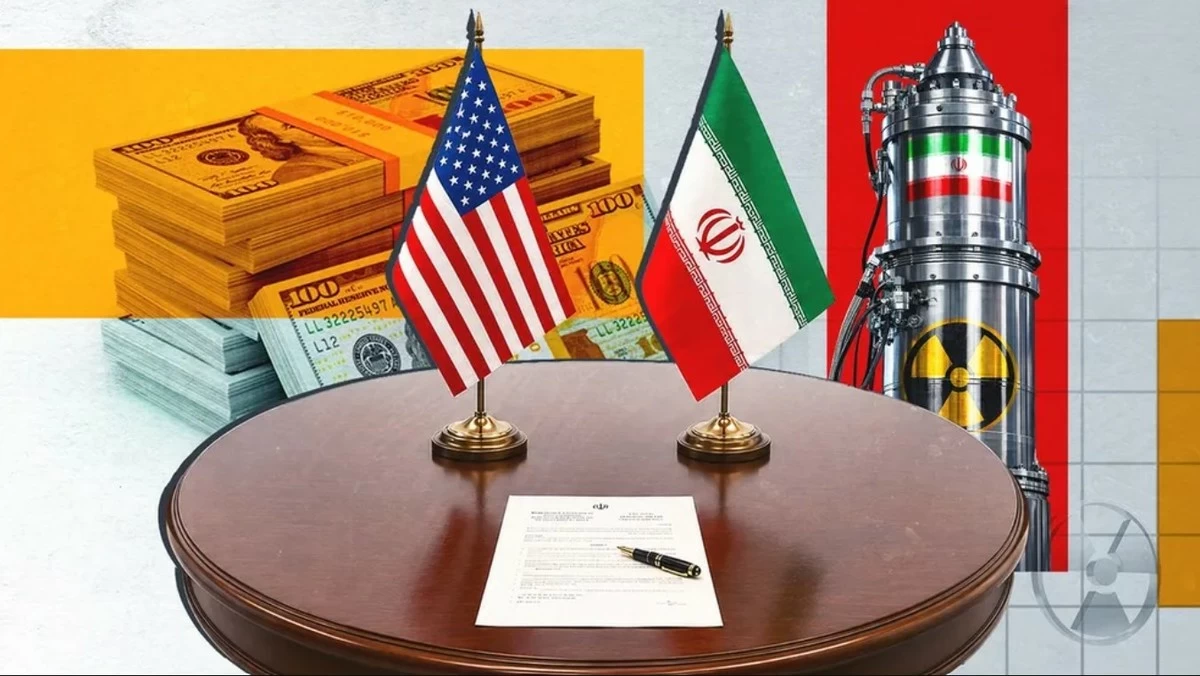
US-Iran Framework Includes $300 Billion Private Investment Fund for Iran Reconstruction
Summarized and contextualized by DistantNews.
At a glance
News
Named sources
New plan
- A reported US-Iran framework agreement includes a $300 billion private investment fund for reconstruction projects in Iran.
- The fund would rely solely on private investment from companies across the globe, with over half the amount already committed.
- This initiative aims to create economic incentives for both nations to reach a final agreement, separate from sanctions relief and asset release talks.
A potential framework agreement between the United States and Iran reportedly includes a significant private investment fund, valued at $300 billion, to support reconstruction and investment projects within Iran. More than half of this amount has already been committed by companies hailing from the US, Persian Gulf nations, Asia, South America, and Africa.
The proposed Reconstruction and Development Fund is designed to create economic incentives for both sides to reach a final agreement.
The proposed Reconstruction and Development Fund is designed to foster economic incentives for both Washington and Tehran to finalize a broader agreement. Crucially, the fund would operate entirely on private capital, excluding any government funding or grants. Planned investments are set to span key sectors such as energy, logistics, manufacturing, and transportation.
The fund would rely entirely on private investment and would not include government funding or grants.
This initiative emerged as an alternative after Iran's initial request for $400 billion in compensation for war-related damages was rejected by the US. Regional countries could also participate by facilitating loans, establishing credit facilities, or directly financing reconstruction efforts at damaged sites, including vital infrastructure like the Mobarakeh Steel complex and airports.
companies from the United States, Persian Gulf countries, Asia, South America and Africa have agreed to provide financing, with planned investments covering sectors including energy, logistics, manufacturing and transportation.
Notably, the investment fund would be kept separate from ongoing negotiations concerning the lifting of US sanctions and the release of frozen Iranian assets. The fund's establishment and operationalization are contingent upon the signing of a final, mutually acceptable agreement. During a preliminary 60-day memorandum period, administrators would collaborate with Iranian officials and potential investors to identify and evaluate future projects.
Tehran had initially sought $400 billion in compensation from the United States for war-related damages, but Washington rejected the request.
DistantNews Editorial
Originally published by Arab Times. Summarized and contextualized by our editorial team with added local perspective. Read our editorial standards.
More Stories


From Our Blog

What Gets Lost (and Found) When News Is Translated

The Critical Role of Diaspora Media in Global News

What Travellers Should Know About Countries with Restricted Press

A Digital Nomad's Guide to Following Local News

How the Same Story Looks Different in Different Countries
