


US-Iran interim deal signed to end Middle East war, but details and scope remain unclear
Translated from English, summarized and contextualized by DistantNews.
At a glance
News
Unnamed sources
Ongoing story
- The US and Iran have reportedly signed an interim deal to end the Middle East war, with details yet to be public.
- The agreement would extend a ceasefire for 60 days and reopen the Strait of Hormuz, with further talks on Iran's nuclear program planned.
- Shippers remain cautious, and fundamental questions about the deal's scope, particularly regarding Iran's proxy support and missile program, are unanswered.
Doubts linger over a preliminary US-Iran deal aimed at ending the Middle East conflict, as shippers express skepticism about the return of confidence following any reopening of the Strait of Hormuz. Crucial details remain undisclosed, and fundamental questions about the agreement's scope persist.
The deal's all signed
US President Donald Trump announced Monday that an interim agreement to end the war had been signed by the US and Iran. However, specifics have not yet been released, and both nations acknowledge that a permanent truce is still under negotiation. The preliminary deal is expected to extend a fragile ceasefire, initially announced in April, by an additional 60 days. It also includes provisions for reopening the Strait of Hormuz, a vital waterway that Iran had effectively blocked since February.
During the 60-day window, negotiators are slated to address complex issues, including the future of Iran's nuclear program. Notably, two key justifications cited by Trump and Israeli Prime Minister Benjamin Netanyahu for initiating the war, ending Iran's support for regional armed groups and curbing its missile program, do not appear to be on the agenda for these upcoming negotiations.
an important step
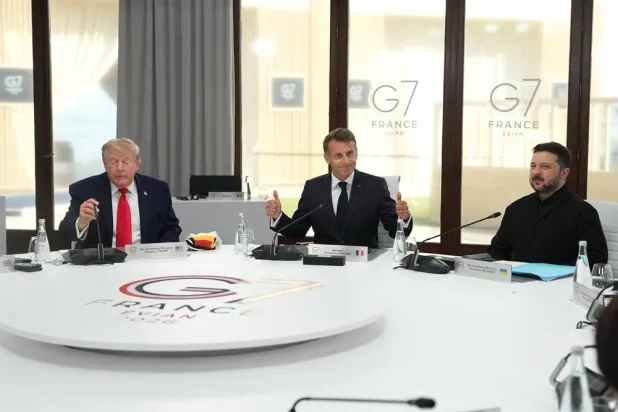
Trump declared, "The deal's all signed," upon arriving at the G7 summit in France. He indicated that Vice President JD Vance would attend a formal signing ceremony in Geneva on Friday. Oil prices saw a dip on Monday following the blockade of the Strait of Hormuz, which had disrupted a fifth of global oil trade. However, prices stabilized on Tuesday, reflecting a more cautious market outlook.
has yet to take shape
While the agreement represents a significant step toward resolving the conflict, which has claimed at least 7,000 lives and disrupted global energy markets, its full implications remain unclear. Iranian President Masoud Pezeshkian described the interim agreement as an "important step" but noted that a final deal for a lasting truce "has yet to take shape." US officials, speaking anonymously, suggested that Iran must meet US demands regarding its nuclear ambitions and support for armed groups to receive sanctions relief. Iranian officials maintain they have no intention of building nuclear weapons and argue they have conceded little by agreeing to resume diplomatic discussions.
a very general document
DistantNews Editorial
Originally published by Asharq Al-Awsat in English. Translated, summarized, and contextualized by our editorial team with added local perspective. Read our editorial standards.
More Stories


From Our Blog

What Gets Lost (and Found) When News Is Translated

The Critical Role of Diaspora Media in Global News

What Travellers Should Know About Countries with Restricted Press

A Digital Nomad's Guide to Following Local News

How the Same Story Looks Different in Different Countries
