


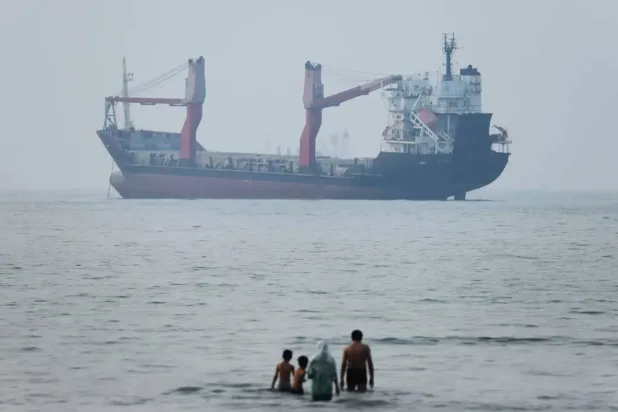
US Offers Tehran a Trade-Off: Frozen Funds in Exchange for Abandoning Hormuz Toll Payments
Summarized and contextualized by DistantNews.
At a glance
News
Named sources
Context piece
- The U.S. and Oman are attempting to dissuade Iran from imposing tolls on ships transiting the Strait of Hormuz, offering to unfreeze some of its overseas assets as leverage.
- Iran insists on managing the strait jointly with Oman and charging fees for security, safety, and environmental services, estimating potential revenue of $40 billion annually.
- U.S. officials argue that Iran could gain significantly more by freely developing its oil and resources under a sanctions-lifting deal, calling the toll demand a "gangster tactic."
- Talks have also involved an Omani proposal for a voluntary maritime fund, with shipping companies potentially paying service fees rather than mandatory tolls.
The United States, in coordination with Oman, is seeking to halt Iran's insistence on charging tolls for ships passing through the Strait of Hormuz. According to reports, the U.S. is using the potential unfreezing of some of Iran's overseas funds, estimated at $100 billion, as a key bargaining chip in indirect negotiations.
Think bigger.
U.S. officials, including envoys Steve Witkoff and Jared Kushner, have conveyed to Iran that demanding tolls could jeopardize a broader deal that would be far more beneficial. They argue that Iran could generate revenues "100 times more valuable" by freely developing its oil and other resources if U.S. sanctions were lifted entirely, contrasting this with what they term a "gangster tactic."
Iran, however, maintains its position, proposing to manage the Strait of Hormuz jointly with Oman and impose service fees. Tehran estimates this could generate $40 billion per year for the involved states, citing security, safety, and environmental services. Iranian Deputy Foreign Minister Kazem Gharibabadi asserted that the Strait falls under Iran's command, not CENTCOM, and military officials have threatened a "forceful response" to ships using unapproved routes.
The sums Iran could generate from developing and selling oil and other resources freely, if the U.S. lifted all sanctions under a deal, would be 100 times more valuable to them than using a gangster tactic to try and charge a toll.
Meanwhile, Oman has put forward a compromise proposal suggesting a voluntary maritime fund. Under this Omani initiative, shipping companies would pay service fees, framed as voluntary contributions rather than mandatory tolls. Negotiators are actively discussing this proposal, exploring ways to manage transit through the vital waterway.
Hormuz is defined under Iran’s command, not CENTCOM.
DistantNews Editorial
Originally published by Asharq Al-Awsat. Summarized and contextualized by our editorial team with added local perspective. Read our editorial standards.
More Stories

From Our Blog

What Gets Lost (and Found) When News Is Translated

The Critical Role of Diaspora Media in Global News

What Travellers Should Know About Countries with Restricted Press

A Digital Nomad's Guide to Following Local News

How the Same Story Looks Different in Different Countries
