


US proposes expanding Sudan arms embargo to entire country
Translated from English and summarized by DistantNews. Read the original for the full story.
At a glance
News
Sources not specified
Ongoing story
- The United States has proposed extending its two-decade-old arms embargo on Darfur to cover all of Sudan.
- This initiative aims to limit the warring parties' ability to sustain conflict and pressure them toward negotiations.
- Russia has expressed reservations about measures affecting the Sudanese army, while China remains cautious, creating uncertainty about the proposal's adoption.
The United States is seeking to intensify pressure on the warring factions in Sudan by proposing an expansion of the arms embargo currently in place for Darfur to cover the entire country. This strategic shift signals a move beyond limited sanctions towards a direct attempt to curb the belligerents' capacity for sustained combat and compel them to reconsider the pursuit of a military victory.
the US proposal would cover drones, related technologies and components, while strengthening the work of the sanctions panel of experts tasked with monitoring violations.
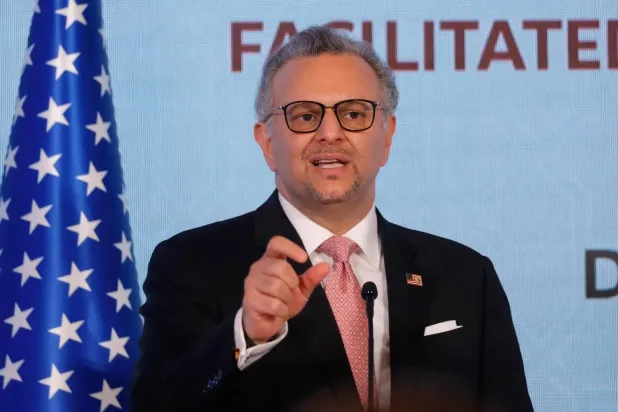
This potentially risky step underscores Washington's determination to achieve a breakthrough in a conflict described as one of the world's most severe humanitarian crises. Massad Boulos, a senior advisor to the U.S. president for Arab and African affairs, recently informed the UN Security Council that the proposed embargo would include drones and related technologies. The plan also involves strengthening the sanctions monitoring panel of experts.
The current Darfur arms embargo is set to expire on September 12, making the coming weeks crucial for Washington's efforts to build consensus within the Security Council. However, the proposal faces significant hurdles. Russia has voiced clear opposition, stating it will not support measures that impact the Sudanese army's capabilities. China, meanwhile, has adopted a cautious stance on expanding sanctions, leaving the adoption of the proposal in its current form uncertain.
Russia has voiced clear reservations, saying it would not accept measures affecting the Sudanese army’s capabilities, while China has taken a cautious position on expanding sanctions, leaving adoption of the proposal in its current form uncertain.
Washington views the proposed embargo as a tool to encourage negotiation rather than solely as a punitive measure. The U.S. administration believes that restricting the flow of weapons could push the parties back to the negotiating table, a sentiment echoed by UN political affairs chief Rosemary DiCarlo, who has warned against the parties' continued reliance on military solutions and the influx of sophisticated weaponry.
Washington views the proposed embargo as a pressure tool rather than merely a punitive measure.
Despite these international efforts, Sudan's Sovereignty Council chairman and army chief, Gen. Abdel Fattah al-Burhan, has downplayed the potential impact of sanctions, asserting they will not weaken the armed forces' resolve. He maintains the army will continue fighting until it reclaims all areas controlled by the Rapid Support Forces (RSF). This stance highlights the political struggle surrounding the U.S. proposal, as Washington aims to convince both sides that open-ended rearmament is unsustainable, while Sudan's military leadership remains focused on territorial gains. The RSF is also reinforcing its positions and relying on its own supply networks, weapons, and drones.
According to The Associated Press, the US administration believes restricting the flow of weapons to the belligerents could push them back to the negotiating table.
About this summary
Originally published by Asharq Al-Awsat in English. Translated, summarized, and contextualized automatically by DistantNews, with a note on how the source frames the story. Not individually reviewed before publishing. How this works.
More Stories


From Our Blog

What Gets Lost (and Found) When News Is Translated

The Critical Role of Diaspora Media in Global News

What Travellers Should Know About Countries with Restricted Press

A Digital Nomad's Guide to Following Local News

How the Same Story Looks Different in Different Countries
