


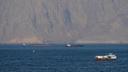
US reimposes blockade on Iranian ports amid escalating Middle East tensions
Translated from Croatian, summarized and contextualized by DistantNews.
At a glance
News
Named sources
Ongoing story
- The U.S. military has reimposed a blockade on ships entering and exiting Iranian ports, involving 20 warships and hundreds of aircraft.
- This action follows a series of reported explosions in Iranian cities, including Bushehr, which houses a nuclear power plant.
- Tensions escalate as Iran claims to have attacked U.S. bases in Bahrain and Jordan, while the U.S. navigates trade and investment deals with Gulf states.
The United States military announced Tuesday the re-establishment of a blockade on ships entering and exiting Iranian ports, deploying 20 warships and hundreds of aircraft in an operation that began at 10 p.m. Croatian time. This move intensifies the ongoing conflict in the Middle East, with Iranian state media reporting explosions in multiple cities, including Bushehr, home to a nuclear power plant.
Earlier, the U.S. launched attacks on Iran for the third consecutive night. In response, Tehran declared that its military had targeted U.S. bases in Bahrain and Jordan, following earlier strikes on two tankers from the United Arab Emirates. The situation remains highly volatile, with significant military assets engaged on both sides.
Based on very productive discussions with Middle East leadership, I have decided to replace the 20 percent fee with trade and investment agreements that various Gulf states will enter into with the United States.
This escalation follows a period of diplomatic maneuvering by U.S. President Donald Trump. Earlier on Tuesday, Trump abandoned a proposal to impose a 20 percent fee for passage through the Strait of Hormuz, opting instead for investment agreements with Gulf states. This decision came after Iran had closed the Strait of Hormuz at the beginning of the week, prompting Trump to initially reinstate the blockade on Iranian shipping and propose the fee.
However, less than five hours before the fee was to be implemented, Trump stated that Hormuz would remain open to all shipping traffic except for Iranian vessels. "Based on very productive discussions with Middle East leadership, I have decided to replace the 20 percent fee with trade and investment agreements that various Gulf states will enter into with the United States," Trump announced on the platform Truth Social. The U.S. stood to gain approximately $240 million daily from the proposed fee.
I don't think anyone should have the right to charge a fee to ships passing through the Strait of Hormuz. I don't like the concept of a fee, but at the same time, it is not fair that we protect this strait for the whole world.
DistantNews Editorial
Originally published by Večernji List in Croatian. Translated, summarized, and contextualized by our editorial team with added local perspective. Read our editorial standards.
More Stories


From Our Blog

What Gets Lost (and Found) When News Is Translated

The Critical Role of Diaspora Media in Global News

What Travellers Should Know About Countries with Restricted Press

A Digital Nomad's Guide to Following Local News

How the Same Story Looks Different in Different Countries
