


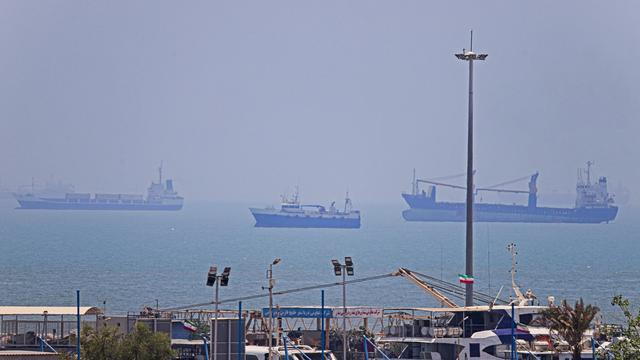
US reimposes oil sanctions on Iran after tanker attacks in Strait of Hormuz
Translated from German, summarized and contextualized by DistantNews.
At a glance
News
From a news agency
New plan
- The US reimposed oil sanctions on Iran after blaming it for attacks on tankers in the Strait of Hormuz.
- The US Treasury revoked a temporary license that allowed trade in Iranian oil, causing oil prices to rise.
- Iran has not yet commented on the attacks or the reimposed sanctions, while US officials state negotiations continue.
The United States has reinstated oil sanctions against Iran, citing responsibility for "completely unacceptable" attacks on three tankers near the Strait of Hormuz. The US Treasury revoked a license that had temporarily permitted trade in Iranian crude oil and related products, a measure that was part of a broader framework agreement. This action immediately led to an increase in oil prices for Brent and WTI crude.
A US official stated that Iran must face consequences for its actions in the Strait of Hormuz. The Iranian mission to the United Nations has not yet responded to requests for comment. The attacks, which involved unknown projectiles hitting three tankers, were reported by the UK Maritime Trade Operations (UKMTO).
Iran must face consequences for its actions in the Strait of Hormuz.
The revoked license was a key component of the framework agreement signed in mid-June, allowing Iran to produce, sell, and deliver crude oil and related products until August 21. Despite the recent escalation, US officials indicated that negotiators are still working in good faith towards a final agreement, emphasizing that sanctions relief is "fully performance-based" and contingent on "good behavior" from Iran.
The Strait of Hormuz, a vital waterway for global shipping, has been a central point in US-Iran negotiations. The agreement stipulated its complete opening and free passage for tankers. The UKMTO reported that the number of attacks on ships in the region had reached a comparable level in April.
The sanctions relief is fully performance-based.
DistantNews Editorial
Originally published by Die Zeit in German. Translated, summarized, and contextualized by our editorial team with added local perspective. Read our editorial standards.
More Stories

From Our Blog

What Gets Lost (and Found) When News Is Translated

How the Same Story Looks Different in Different Countries

The Critical Role of Diaspora Media in Global News

What Travellers Should Know About Countries with Restricted Press

A Digital Nomad's Guide to Following Local News
