


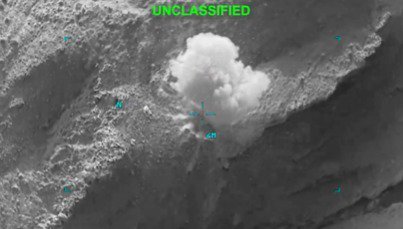
US resumes airstrikes on Iran after Jordan base attack; Trump vows strong response
Translated from Korean, summarized and contextualized by DistantNews.
At a glance
News
Named sources
Ongoing story
- The U.S. resumed airstrikes against Iran on July 29, targeting dozens of sites after Iran attacked a U.S. base in Jordan.
- President Trump signaled a tougher stance, stating, "It's our turn now" and vowing to "beat" Iran.
- The strikes come amid heightened military tensions and concerns about potential escalation, with a fire also reported on a U.S.-owned LNG vessel in Egypt.
The United States resumed airstrikes against Iran on July 29, targeting dozens of military command facilities, missile and drone bases, and coastal defense sites. This action follows Iran's missile attack on a U.S. base in Jordan the previous day. The resumption of strikes marks a significant escalation in military tensions between the two nations, raising concerns about a potential large-scale conflict.
U.S. Central Command, which oversees military operations in the Middle East, confirmed the strikes, describing them as a response to Iran's actions. Earlier, on July 24, President Donald Trump had paused a 13-day streak of airstrikes, suggesting a possibility of negotiations with Iran. However, the military operation's restart indicates a shift towards a more forceful approach.
President Trump expressed a strong retaliatory intent, telling reporters, "We are going to hit Iran very hard today. It's our turn now." In a Fox News interview, he used stronger language, stating, "We're going to beat them up," underscoring his commitment to a robust response.
We are going to hit Iran very hard today. It's our turn now.
Despite the unified public stance, internal differences within the U.S. military leadership have emerged. According to The Wall Street Journal, U.S. Central Command chief Brad Cooper proposed a plan for intensive airstrikes over two weeks to cripple Iran's missile capabilities, arguing that simple responses were insufficient to break the current stalemate. In contrast, Chairman of the Joint Chiefs of Staff Dan Caine urged a more cautious approach, citing concerns about reduced U.S. missile defense stocks and the potential weakening of defenses for U.S. bases and allies worldwide.
Adding to the regional instability, a fire broke out on a U.S.-owned liquefied natural gas (LNG) floating storage and regasification unit (FSRU) docked at Damietta port in Egypt on the same day. While some suggested Iran's drone attacks as a possible cause, Egyptian authorities confirmed the fire but did not disclose the origin or perpetrator. The incident fuels concerns about the potential impact of the conflict on energy infrastructure, particularly given the strategic locations of the Strait of Hormuz and the Red Sea, which are currently experiencing blockades and Houthi rebel activity.
We're going to beat them up.
DistantNews Editorial
Originally published by Dong-A Ilbo in Korean. Translated, summarized, and contextualized by our editorial team with added local perspective. Read our editorial standards.
More Stories


From Our Blog

What Gets Lost (and Found) When News Is Translated

The Critical Role of Diaspora Media in Global News

What Travellers Should Know About Countries with Restricted Press

A Digital Nomad's Guide to Following Local News

How the Same Story Looks Different in Different Countries
