


US Risks Losing Global Control as Europe Gains Military Independence
Translated from Romanian, summarized and contextualized by DistantNews.
At a glance
Analysis
Named sources
Context piece
- Europe's growing military independence, spurred by US calls for increased defense spending, risks diminishing US global influence, according to an analysis.
- While European nations have increased defense budgets, the US maintains a record military budget, with a relatively small portion allocated to European defense.
- This shift could lead to geopolitical and economic losses for the US, as Europe seeks to reduce its reliance on the American military-industrial complex.
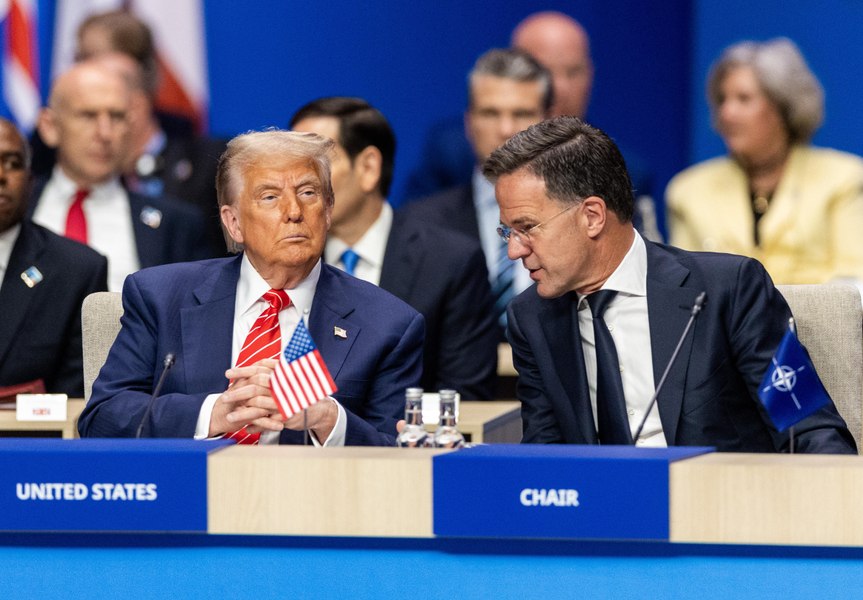
Washington's repeated calls for European allies to boost their defense budgets may be yielding results, but this shift carries a significant geopolitical risk for the United States. As Europe develops greater military autonomy, the U.S. could lose its most crucial levers of global influence and destabilize an international order it has shaped for over seven decades.
As Europe develops its military autonomy, the United States risks losing its most important levers of global influence and destabilizing a world order that has benefited it for over seven decades.
A common assumption is that increased European defense spending will allow the U.S. to cut its own military costs. However, this premise might be flawed. Fareed Zakaria, writing for The Washington Post, suggests that the processes initiated by Donald Trump's administration risk severe geopolitical and economic repercussions for Washington.
The processes initiated by Donald Trump risk bringing severe geopolitical and economic losses to Washington.
While European NATO members have increased their defense spending from 1.4% of GDP in 2014 to 2.3% in 2025, the Trump administration has proposed a record $1.5 trillion US defense budget for fiscal year 2027. This contrast highlights that U.S. spending reflects its global superpower status, with only about 5% of its total military budget directed specifically toward European defense. According to Zakaria, these relatively low costs have historically provided the U.S. with disproportionately large benefits: political influence, extensive military bases, allied support, and leadership within NATO.
The relatively small costs have ensured that the United States, for decades, has received disproportionately large benefits: political influence, an extensive network of military bases, allied support, and leadership in NATO.
For over 75 years, U.S. dominance in NATO has granted strategic advantages, including the use of over 30 military bases in Europe as power projection platforms. European governments have facilitated U.S. military operations, even those domestically unpopular, and have traditionally purchased American weaponry. Now, European officials openly discuss reducing dependence on the U.S. military-industrial complex, fearing potential disruptions in spare parts or software updates from a future U.S. administration. This dynamic not only threatens financial losses for American defense firms but also diminishes a key U.S. political influence over its allies. The long-term challenge could be the resurgence of national militarism in Europe, a scenario the post-1945 U.S. strategy aimed to contain under its "nuclear umbrella."
European officials are now openly talking about the need to reduce dependence on the American military-industrial complex.
DistantNews Editorial
Originally published by Adevărul in Romanian. Translated, summarized, and contextualized by our editorial team with added local perspective. Read our editorial standards.
More Stories


From Our Blog

What Gets Lost (and Found) When News Is Translated

The Critical Role of Diaspora Media in Global News

What Travellers Should Know About Countries with Restricted Press

A Digital Nomad's Guide to Following Local News

How the Same Story Looks Different in Different Countries
