



US Says Defending Hormuz Is Not America’s Responsibility Alone, Urges Allies to Contribute Militarily
Translated from Korean and summarized by DistantNews. Read the original for the full story.
At a glance
News
Named sources
Ongoing story
- US Energy Secretary Chris Wright urged allies outside the Middle East to deploy military assets to help secure shipping through the Strait of Hormuz.
- Wright said the United States might destroy Iran’s ability to develop nuclear weapons even without a nuclear agreement.
- He disputed private analysts’ claims that the US government overstated oil flows through Hormuz, putting recent maritime shipments above 9 million barrels per day and total flows at 13 million to 14 million barrels when bypass pipelines are included.
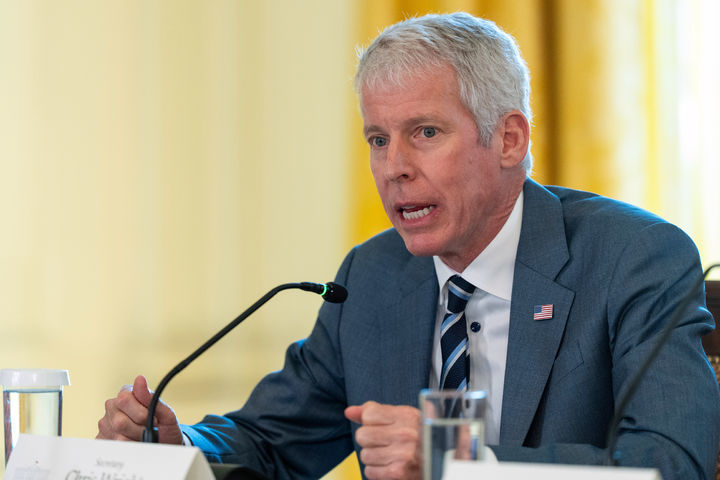
US Energy Secretary Chris Wright says protecting navigation through the Strait of Hormuz should not remain an American burden alone. He called for military assets from allies outside the Middle East to join the effort quickly.
In a Fox News interview on the 6th, Wright said many countries had contacted the United States because they wanted to cooperate and help. The military assets currently involved belong to US allies and partners in the region, he said, but he hoped assets from outside the region would arrive soon.
Many other countries have contacted us. They want to cooperate with us and they want to help.
Wright also told CNN that US military support remains essential to the safety of ships currently passing through the strait. Asked whether commercial vessels could safely transit, he said he believed they could if they worked with the US Navy. Asked whether the Navy’s role had become a long-term “new normal,” Wright replied, “Today, it is,” while saying he expected other countries to join the effort.
Today, it is.
“World trade is important, and this should not be America’s responsibility alone,” Wright said. He did not identify South Korea specifically or say what military assets or form of support Washington wanted, even as the South Korean government considers expanding its military contribution in Hormuz.
Wright also suggested that the Trump administration is placing less emphasis than before on reaching a nuclear agreement with Iran. In an ABC interview, he said, “There may be no nuclear deal,” and that the conflict could end with the destruction of Iran’s ability to develop nuclear weapons. He said a deal might have to wait until Iran’s next administration. Asked whether the United States could continue attacking if Iran rebuilt its nuclear facilities, Wright responded, “We have to destroy their capability.”
World trade is important, and this should not be America’s responsibility alone.
He rejected criticism from private analysts who said the US government had exaggerated the amount of oil passing through Hormuz. Wright claimed that the seven-day average of maritime oil shipments recently exceeded 9 million barrels per day. Including oil sent through bypass pipelines in Saudi Arabia and the United Arab Emirates, he put the total at 13 million to 14 million barrels per day.
There may be no nuclear deal.
About this summary
Originally published by Hankyoreh in Korean. Translated, summarized, and contextualized automatically by DistantNews, with a note on how the source frames the story. Not individually reviewed before publishing. How this works.
More Stories

From Our Blog

News in Translation: What Gets Lost, and How We Keep the Framing

Diaspora Media: How Communities Follow News From Home

Traveling Where the Press Is Not Free: How to Read the News There

The Digital Nomad's Guide to Local News

The Same Story, Different Countries: How Coverage Changes at the Border
