


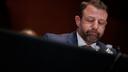
US Security Chief: Drone Defense Systems Lagging, Posing Major Threat
Translated from Croatian, summarized and contextualized by DistantNews.
At a glance
News
Named sources
Ongoing story
- US Homeland Security Secretary Markwayne Mullin acknowledged that the US lags in developing drone defense systems.
- He stated that while offensive drone capabilities have advanced, interception and neutralization systems are still developing.
- Mullin cited recent incidents, including drones entering restricted airspace during the Miami Grand Prix, as evidence of the ongoing challenge.
U.S. Homeland Security Secretary Markwayne Mullin admitted that the United States is still behind in developing effective drone defense systems, despite significant progress. He highlighted that while the U.S. has invested heavily in offensive drone capabilities, the systems for intercepting and neutralizing these threats are still catching up.
During a hearing before the House Homeland Security Committee, Mullin described drones as one of the biggest security threats facing the nation, particularly with major events like the upcoming World Cup on the horizon. He noted that unauthorized drones continue to enter restricted airspace above large sporting and public gatherings regularly.
We have invested enormous resources and capabilities in developing offensive drone capabilities, but when it comes to systems for their interception and neutralization, we are all still lagging somewhat.
As an example, Mullin pointed to the recent Formula 1 Miami Grand Prix, where eight drones breached the limited airspace. While security services managed to intercept these drones, identify their operators, and make arrests in some cases, the incident underscored the persistent challenge.
Drones are my biggest concern.
Mullin emphasized that drones are his "biggest concern" and that while the U.S. is improving its protective systems daily, it remains an "extremely serious challenge."
Security experts warn of various threats posed by drones, ranging from disrupting sporting events to potential terrorist attacks. The Secret Service has also previously flagged issues with acquiring necessary drone defense technology, partly due to supply chain problems. The agency has reportedly spent over $100 million in the past 18 months to enhance its capabilities in this area. Additional challenges include gaps in tracking and neutralization systems, a two-month shutdown of the Department of Homeland Security that slowed preparations, and a lack of familiarity among some officials with new drone-related authorities.
We are improving protection systems every day, but it is an extremely serious challenge.
DistantNews Editorial
Originally published by Večernji List in Croatian. Translated, summarized, and contextualized by our editorial team with added local perspective. Read our editorial standards.
More Stories

From Our Blog

What Gets Lost (and Found) When News Is Translated

The Critical Role of Diaspora Media in Global News

What Travellers Should Know About Countries with Restricted Press

A Digital Nomad's Guide to Following Local News

How the Same Story Looks Different in Different Countries
