


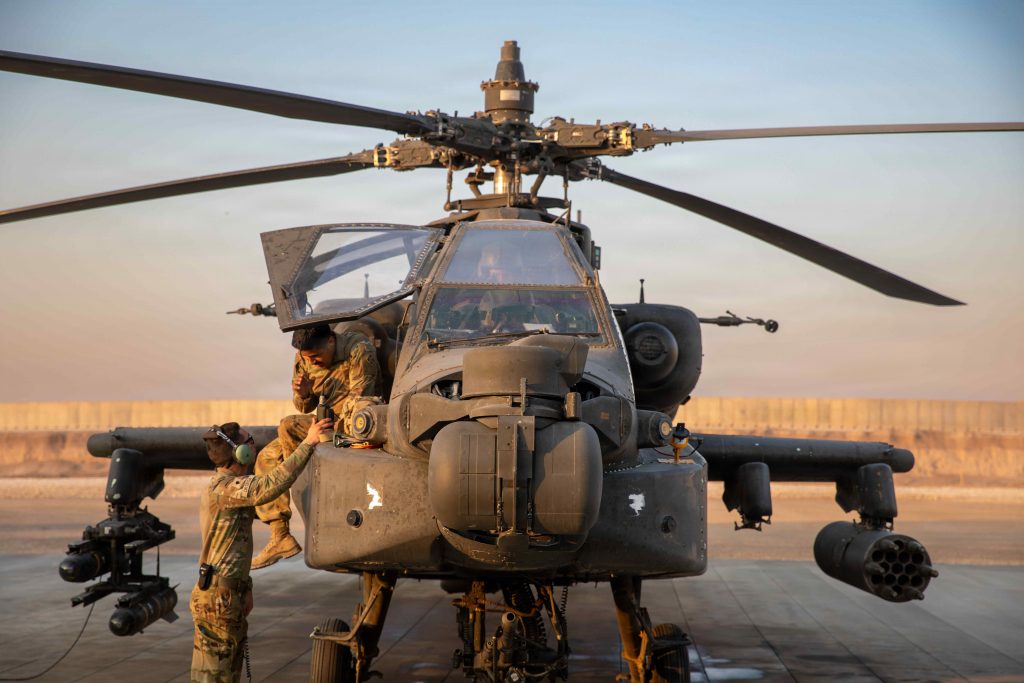
US strikes Iran after helicopter downed over Strait of Hormuz
Translated from French, summarized and contextualized by DistantNews.
At a glance
News
Named sources
Ongoing story
- U.S. Central Command announced retaliatory strikes against Iranian positions after an Apache helicopter was shot down over the Strait of Hormuz.
- The U.S. stated the strikes were a proportionate response to an unjustified Iranian aggression, while Iran's foreign minister warned foreign forces against endangering themselves near Iranian territory.
- The incident, involving the rescue of two pilots by a drone boat, raises concerns about regional escalation and the security of the strategic Strait of Hormuz.
The U.S. Central Command confirmed Tuesday that its forces launched retaliatory strikes against Iranian positions. This action followed the downing of a U.S. Army Apache helicopter the previous day. The command described the operation as a "proportionate response to unjustified Iranian aggression."
The U.S. Central Command announced Tuesday that its forces "began launching self-defense strikes against Iran" on the orders of the commander-in-chief, in response to the downing the previous day of a U.S. Army AH-64 Apache helicopter.
President Donald Trump stated on Truth Social that the sophisticated Apache helicopter was shot down during a patrol over the Strait of Hormuz. He assured that the two pilots were safe and unharmed, but emphasized that the United States "must, of necessity, respond to this attack."
The Iranians shot down one of our very fine sophisticated Apache helicopters during a patrol over the Strait of Hormuz.
According to U.S. officials cited by NBC News and CENTCOM, the two crew members were rescued by a "drone boat," a type of unmanned surface vessel. This marked the first reported recovery of its kind by U.S. forces. The rescue occurred about two hours after the incident, with the pilots reported to be in stable condition and receiving medical care. Initial indications suggest the Apache may have been shot down by an Iranian drone, though the incident's origin is under investigation.
The United States must, of necessity, respond to this attack.
Iranian officials downplayed their involvement. Abbas Araghchi, Iran's foreign minister, posted on X that foreign forces endanger themselves by operating near Iranian territory. He suggested the best way to reduce risk is for them to leave, adding, "We prefer the language of diplomacy, but we also speak other languages."
The best solution to reduce the risk is for them to leave.
DistantNews Editorial
Originally published by El Watan in French. Translated, summarized, and contextualized by our editorial team with added local perspective. Read our editorial standards.
More Stories

From Our Blog

What Gets Lost (and Found) When News Is Translated

The Critical Role of Diaspora Media in Global News

What Travellers Should Know About Countries with Restricted Press

A Digital Nomad's Guide to Following Local News

How the Same Story Looks Different in Different Countries
