


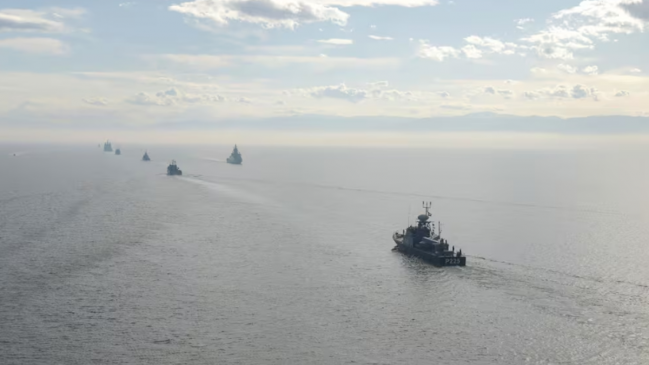
US strikes Iranian military targets after drone attacks on tankers in Strait of Hormuz
Translated from Spanish, summarized and contextualized by DistantNews.
At a glance
News
Sources not specified
Ongoing story
- The U.S. launched new military strikes against targets in Iran following drone attacks on commercial tankers in the Strait of Hormuz.
- U.S. Central Command stated the strikes were a direct response to Iran's continued aggression against commercial shipping.
- The U.S. military confirmed that commercial transit through the Strait of Hormuz remains uninterrupted.
The United States conducted a new series of strikes against multiple military targets in Iran on Saturday, escalating tensions in the Strait of Hormuz. U.S. Central Command (Centcom) announced the action, stating it was in direct response to Iran's ongoing aggression toward commercial navigation. Centcom reported that following U.S. airstrikes on Friday, which were themselves a response to a prior drone attack on the M/V Ever Lovely, Tehran had an opportunity to adhere to a ceasefire agreement but failed to do so. The military command asserted that commercial traffic through the vital waterway remains unimpeded. The offensive targeted Iranian military surveillance infrastructure, communication systems, air defense positions, drone storage facilities, and naval mine deployment capabilities. U.S. forces remain on alert and prepared to respond to further threats, according to the statement. This marks the second major exchange of actions between the two nations since they signed a memorandum of understanding on June 17 aimed at ending hostilities and ensuring free navigation through the Strait of Hormuz, while broader negotiations continue regarding Iran's nuclear program. The U.S. accused Iran of an "insensate" violation of the ceasefire by launching at least four one-way attack drones against ships transiting the strait.
Centcom forces launched strikes today in direct response to continued Iranian aggression against commercial shipping.
DistantNews Editorial
Originally published by Cooperativa in Spanish. Translated, summarized, and contextualized by our editorial team with added local perspective. Read our editorial standards.
More Stories

From Our Blog

What Gets Lost (and Found) When News Is Translated

The Critical Role of Diaspora Media in Global News

What Travellers Should Know About Countries with Restricted Press

A Digital Nomad's Guide to Following Local News

How the Same Story Looks Different in Different Countries
