

US to expand social media checks for more visa types
Translated from Spanish, summarized and contextualized by DistantNews.
At a glance
News
Unnamed sources
New plan
- The U.S. Department of State will expand its social media review to include more visa applicants, including foreign media representatives and certain Canadian and Mexican citizens entering for business.
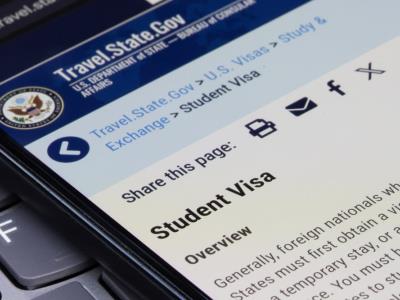
- This expansion builds on a previous policy requiring student visa applicants to make their private social media accounts public.
- The stated purpose is to identify applicants who may be inadmissible due to national security or public safety concerns.
The U.S. Department of State is broadening its social media review process to encompass additional categories of visa applicants. This expansion, detailed in an internal memo obtained by The Daily Signal, aims to enhance the vetting of foreign nationals seeking entry into the United States.
During the visa application and vetting process, the Department draws upon all available information sources to identify applicants who may be inadmissible to the United States, including those who pose a threat to national security or public safety.
New categories subject to scrutiny include applicants for visas as foreign media representatives and qualified citizens of Mexico and Canada entering for business purposes under the USMCA trade agreement, along with their dependent family members. This initiative extends a policy initially announced in June, which mandated that student visa applicants make their private social media accounts public for review.
According to the memo, social media verification is already a part of the process for applicants seeking diplomatic, official, temporary worker, exchange visitor, international cultural program participant, religious worker, and witness/informant/victim visas. The Department emphasizes that it utilizes all available information sources to identify individuals who may pose a threat to national security or public safety.
Every decision on visa issuance is fundamentally a national security decision.
The directive also instructs applicants to set their social media profiles to "public" or "open" to facilitate the review. The document reiterates that "every decision on visa issuance is fundamentally a national security decision." U.S. authorities aim to confirm that applicants do not intend to harm Americans or threaten U.S. interests and that they meet the requirements for their requested visa category. The memo concludes by stating that "receiving a U.S. visa remains a privilege granted at the discretion of the government, not an acquired right."
receiving a U.S. visa remains a privilege granted at the discretion of the government, not an acquired right.
DistantNews Editorial
Originally published by Diario Libre in Spanish. Translated, summarized, and contextualized by our editorial team with added local perspective. Read our editorial standards.
More Stories

From Our Blog

What Gets Lost (and Found) When News Is Translated

The Critical Role of Diaspora Media in Global News

What Travellers Should Know About Countries with Restricted Press

A Digital Nomad's Guide to Following Local News

How the Same Story Looks Different in Different Countries
