

US to impose 'toughest sanctions in history' on Iran
Translated from English, summarized and contextualized by DistantNews.
At a glance
News
Named sources
Context piece
- The U.S. will impose "the toughest sanctions in history" on Iran, according to Treasury Secretary Scott Bessent.
- Bessent stated these sanctions, combined with a blockade, aim to collapse the Iranian regime.
- He suggested that increased economic pressure makes a large-scale kinetic conflict less likely, despite rising oil prices.
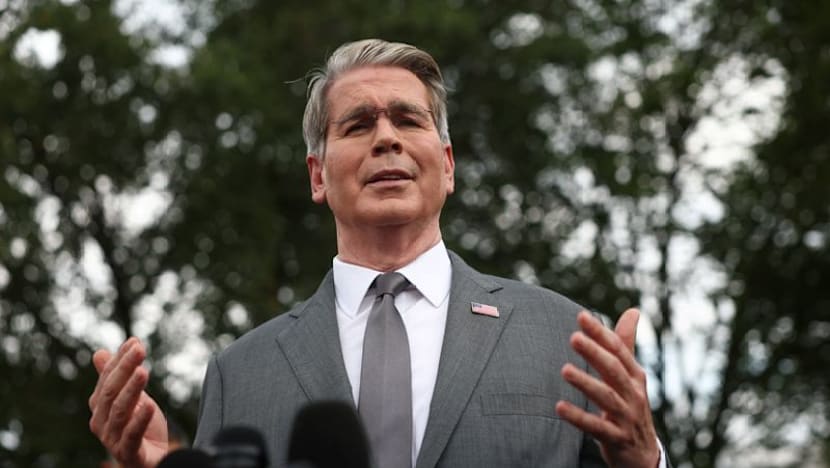
U.S. Treasury Secretary Scott Bessent announced that the United States is set to implement "the toughest sanctions in history" against Iran. Speaking on Thursday, Bessent urged Beijing to cooperate with Washington's efforts, framing the sanctions as a "one-two punch" alongside an existing blockade.
It is a one-two punch. We have the blockade (on Iran), and we are going to have the toughest sanctions in history.
Bessent expressed confidence that the intensified economic pressure would lead to the collapse of the Iranian regime. "It is going to work in Iran and we are going to collapse this regime," he stated, adding that it is time for allies and the global community to make a decision regarding their stance on Iran.
Despite recent climbs in oil prices, Bessent suggested that the robust economic measures could decrease the likelihood of a large-scale kinetic conflict. "If we are doing the maximum economic pressure, then that means that likely there will not be a large-scale kinetic restart," he explained. He believes oil markets are misinterpreting the impact of this economic strategy.
It is going to work in Iran and we are going to collapse this regime.
When questioned about potential actions against China for engaging in business with Iran, Bessent indicated that such discussions are best handled privately. He expressed confidence that nations, including China which relies heavily on energy from the Gulf, would support efforts to reopen the Strait of Hormuz and stabilize energy prices. China procures over 80% of Iran's shipped oil, according to 2025 data.
It is time for our allies and the rest of the world to make a decision.
Meanwhile, Iranian Foreign Minister Abbas Araqchi dismissed President Trump's warnings as an attempt to distract from domestic U.S. economic issues, such as record debt and rising interest rates. Iran has endured significant economic sanctions for decades, dating back to the Islamic Revolution in 1979.
If we are doing the maximum economic pressure, then that means that likely there will not be a large-scale kinetic restart.
DistantNews Editorial
Originally published by CNA in English. Translated, summarized, and contextualized by our editorial team with added local perspective. Read our editorial standards.
More Stories



From Our Blog

What Gets Lost (and Found) When News Is Translated

The Critical Role of Diaspora Media in Global News

What Travellers Should Know About Countries with Restricted Press

A Digital Nomad's Guide to Following Local News

How the Same Story Looks Different in Different Countries
