


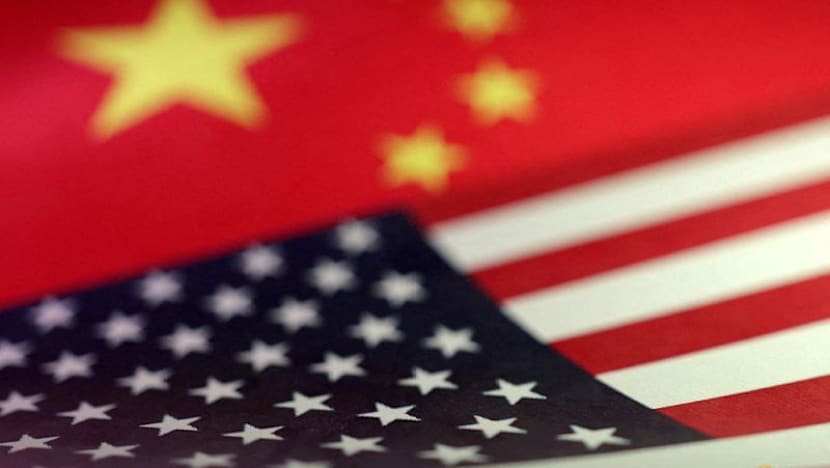
US to tell partners they must pick sides in AI race with China
Summarized and contextualized by DistantNews.
At a glance
News
Named sources
Context piece
- The US is preparing to tell allied countries they must choose between its AI coalition and China's competing framework.
- This move aims to limit China's access to resources in the race for advanced AI, which has potential military and economic applications.
- Countries joining both US-led Pax Silica and China's World Artificial Intelligence Cooperation Organization risk exclusion from the US initiative.
The United States is set to pressure dozens of nations to align with its artificial intelligence initiatives, warning that participation in China's competing framework will lead to exclusion from a US-led AI coalition. This strategic move, detailed in a draft letter from the State Department, aims to consolidate resources and partnerships in the critical race for AI dominance.
Signature of the Pax Silica Declaration is not merely a membership subscription, but a commitment.
Washington launched the Pax Silica initiative last year to secure supply chains for AI models, semiconductors, and essential minerals. The coalition, which includes around two dozen countries, seeks to counter Beijing's growing influence in the fast-moving AI sector. However, the presence of countries like Kazakhstan in both US and Chinese initiatives has raised concerns in Washington.
To be part of everything is to be part of nothing.
China, under President Xi Jinping, has also been active, launching its own "World Artificial Intelligence Cooperation Organization" to promote its technology and challenge US influence. The US strategy emphasizes that joining both initiatives is untenable, with the draft letter stating, "Signature of the Pax Silica Declaration is not merely a membership subscription, but a commitment." The US hopes this ultimatum will starve China of crucial resources needed to develop sophisticated AI, which could be leveraged for economic or military advantage.
It cannot be held alongside membership in duplicative initiatives whose expectations conflict with our own.
DistantNews Editorial
Originally published by CNA. Summarized and contextualized by our editorial team with added local perspective. Read our editorial standards.
More Stories



From Our Blog

What Gets Lost (and Found) When News Is Translated

The Critical Role of Diaspora Media in Global News

What Travellers Should Know About Countries with Restricted Press

A Digital Nomad's Guide to Following Local News

How the Same Story Looks Different in Different Countries
