


US Urges NATO Allies for Clarity on Defense Commitments, Praises Germany
Translated from German and summarized by DistantNews. Read the original for the full story.
At a glance
News
From a news agency
Ongoing story
- The U.S. is asking NATO allies for direct, written feedback on defense policy through questionnaires as part of the "Nato 3.0" concept.
- Under "Nato 3.0," European allies would take primary responsibility for conventional European defense, with the U.S. focusing on its nuclear umbrella and a more targeted conventional contribution.
- The U.S. aims to redirect its military resources toward defending the Western Hemisphere and deterring threats in the Indo-Pacific.
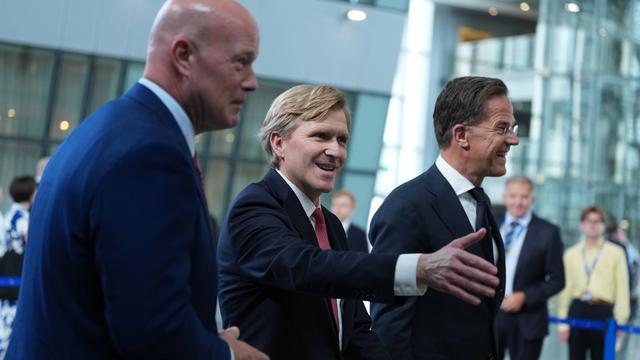
The United States is pressing NATO allies for explicit clarity on their defense commitments, distributing questionnaires as part of a broader review of its military presence in Europe. U.S. Under Secretary of Defense Elbridge Colby stated that this initiative, linked to the "Nato 3.0" concept, aims to directly consult allies in writing.
"We are playing with open cards here," Colby remarked at NATO headquarters in Brussels. He explained that the questionnaires provide allies an opportunity to communicate precisely what the U.S. needs to know. The U.S. has already received several completed forms and is eager to analyze them. "Nato 3.0" envisions a significant shift where European allies assume the lead role in conventional European defense, contributing the majority of necessary forces. While the U.S. would maintain its nuclear deterrent, its conventional contributions would become more limited and focused.
Colby justified these proposed changes by emphasizing Washington's need to concentrate its military resources on defending the U.S. homeland, the Western Hemisphere, and deterring challenges in the Indo-Pacific region. Although specific questions were not disclosed, sources within NATO indicate they cover allies' willingness to assume greater responsibility within the alliance's command structure. Politically sensitive topics, such as procurement from U.S. defense companies and existing restrictions on U.S. forces in Europe, are also reportedly included. These restrictions became a point of contention, particularly after Spain denied the U.S. access to bases and airspace for operations against Iran, leading to what President Trump described as "legitimate frustration" during "Operation Epic Fury."
About this summary
Originally published by Die Zeit in German. Translated, summarized, and contextualized automatically by DistantNews, with a note on how the source frames the story. Not individually reviewed before publishing. How this works.
More Stories


From Our Blog

What Gets Lost (and Found) When News Is Translated

How the Same Story Looks Different in Different Countries

The Critical Role of Diaspora Media in Global News

What Travellers Should Know About Countries with Restricted Press

A Digital Nomad's Guide to Following Local News
