


US used Iran-style covert transfers to move 90 million barrels of oil out of Gulf: Report
Summarized and contextualized by DistantNews.
At a glance
News
Named sources
Ongoing story
- The U.S. reportedly used covert offshore oil transfers near the Strait of Hormuz, mimicking Iran's tactics.
- This operation, launched in early May, moved an estimated 90 million barrels of oil using ships with switched-off transponders.
- While enabling exports, the method is vulnerable to Iranian disruption, and its adoption of 'dark fleet' techniques draws criticism.
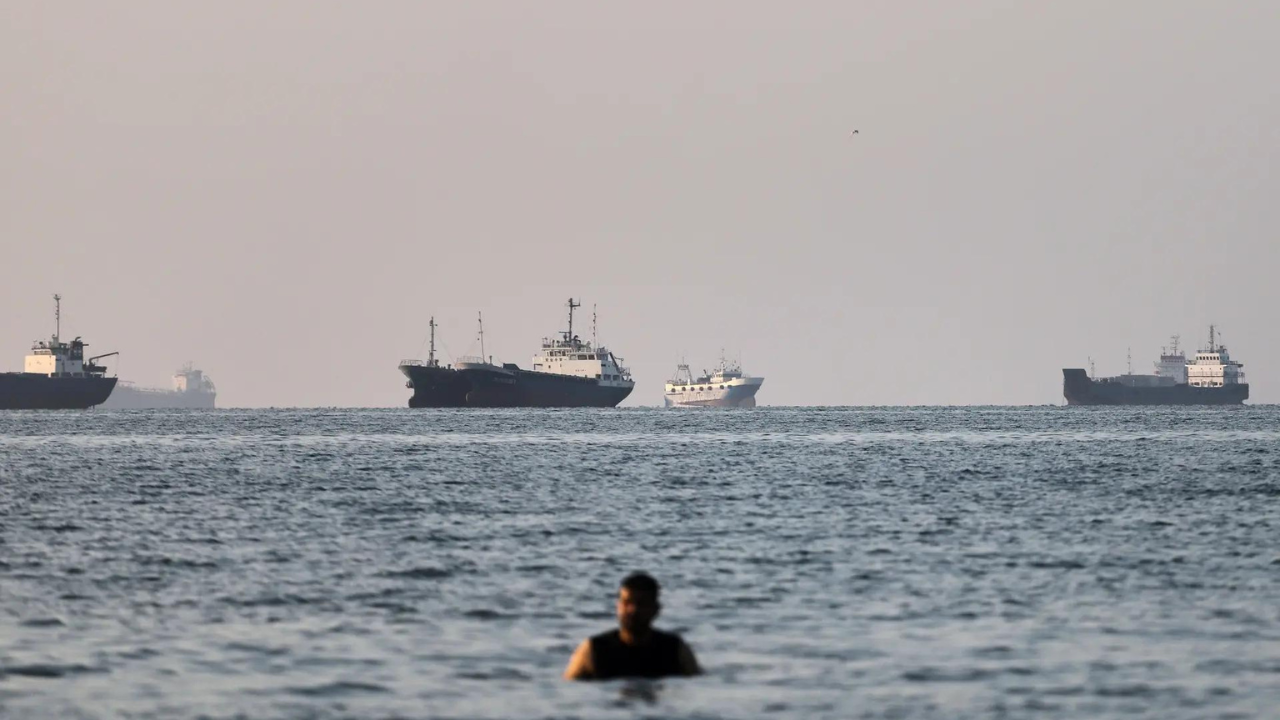
The United States has allegedly established a covert offshore oil-transfer network near the Strait of Hormuz, employing tactics previously associated with Iran to maintain oil flow despite Tehran's actions. The operation, initiated in early May, involves transferring crude oil between vessels off the coasts of Oman and the United Arab Emirates before loading it onto larger tankers for export.
According to Reuters, citing shipping data, satellite imagery, and multiple sources, approximately 90 million barrels of oil and petroleum products may have moved through this network since its inception. This figure, however, is significantly lower than the roughly 20 million barrels that typically transit the strait daily before the recent conflict. The operation relies on at least 92 ships that travel with their transponders switched off and lights dimmed, methods commonly used by Iran's "dark fleet" to evade sanctions and conceal cargo movements.
You just don't know when Iran might just decide to start using drones or even gunboats in order to prevent even those ships from transiting the strait
The emergence of this transfer network follows Iran's disruption of access through the Strait of Hormuz, a critical global energy chokepoint that usually handles about one-fifth of global oil consumption. While U.S. military surveillance, compliance screening, and transit monitoring reportedly support the participating vessels, American personnel are not directly involved in the transfers themselves.
Analysts caution that this system remains vulnerable to potential Iranian actions, such as using drones or gunboats to prevent ship transits. Furthermore, foreign policy observers have noted the irony of the U.S. adopting tactics pioneered by sanctioned states like Iran, China, Russia, and North Korea to circumvent sanctions. "As the old rules weaken, it's ironic that the United States is now taking a page out of the playbook of China, Russia, North Korea, and even Iran," stated Michael Froman, president of the Council on Foreign Relations.
As the old rules weaken, it's ironic that the United States is now taking a page out of the playbook of China, Russia, North Korea, and even Iran, whose so-called 'dark fleets' pioneered these techniques precisely to evade U.S. and UN sanctions
DistantNews Editorial
Originally published by Times of India. Summarized and contextualized by our editorial team with added local perspective. Read our editorial standards.
More Stories


From Our Blog

What Press Freedom Means for the News You Read

What Gets Lost (and Found) When News Is Translated

The Critical Role of Diaspora Media in Global News

What Travellers Should Know About Countries with Restricted Press

A Digital Nomad's Guide to Following Local News
