


US withdraws troops from Nigeria after ISIS deputy's killing
Translated from English, summarized and contextualized by DistantNews.
At a glance
News
Sources not specified
Outcome reported
- The United States has withdrawn most of its forces from a joint counterterrorism operation in Nigeria's Lake Chad Basin.
- Washington will continue to support Nigeria through intelligence sharing and other security cooperation as requested by the Nigerian government.
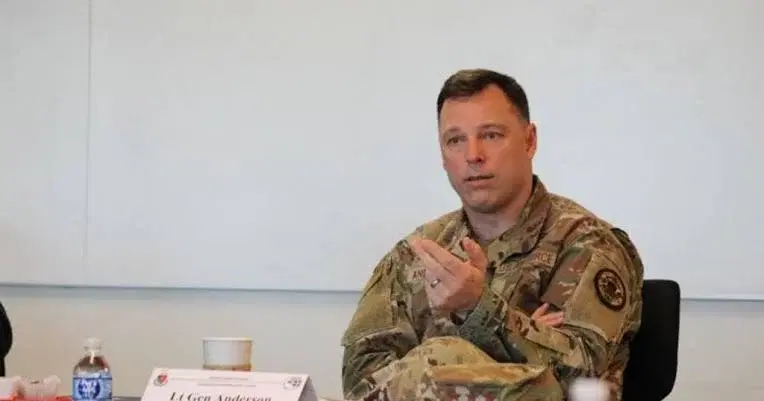
- U.S. Air Forces in Europe-Air Forces Africa Commander Gen. Dagvin R.M. Anderson stated that this cooperation led to the successful operation against the ISIS deputy responsible for global operations.
The United States has concluded a joint counterterrorism operation in Nigeria's Lake Chad Basin, withdrawing most of its forces. However, the U.S. remains committed to supporting Nigeria through continued intelligence sharing and other security cooperation, as requested by the Nigerian government.
And so that operation in the Lake Chad Basin of Nigeria not only helped the countries in that immediate region; it also helps countries globally as that disrupts the ISIS network.
Gen. Dagvin R.M. Anderson, Commander of U.S. Air Forces in Europe-Air Forces Africa, highlighted the success of the intelligence cooperation during a digital press briefing. He noted that the operation disrupted the ISIS network and contributed to global security.
"We have withdrawn much of our forces that were just there for that operation, but we are continuing the partnership that Nigeria has asked for to help continue with the intelligence sharing and the understanding that’s necessary to be able to prosecute these difficult tasks," Anderson said. He described Nigeria as a capable partner with a strong military and economy.
Then, we have withdrawn much of our forces that were just there for that operation, but we are continuing the partnership that Nigeria has asked for to help continue with the intelligence sharing and the understanding that’s necessary to be able to prosecute these difficult tasks.
The U.S. general emphasized that the partnership yielded significant results, including a successful operation against the second-in-command of the ISIS global network. This success, he stated, demonstrated the value of intelligence cooperation over long-term foreign military deployments.
So I think as we go forward, that is an example of how we’re looking at engaging with partners to help them be more effective by only bringing unique U.S. capabilities that a
DistantNews Editorial
Originally published by The Punch in English. Translated, summarized, and contextualized by our editorial team with added local perspective. Read our editorial standards.
More Stories


From Our Blog

How the Same Story Looks Different in Different Countries

What Gets Lost (and Found) When News Is Translated

The Critical Role of Diaspora Media in Global News

What Travellers Should Know About Countries with Restricted Press

A Digital Nomad's Guide to Following Local News
